7 Best Pet-Immune Motion Sensors for Home Alarms (October 2026)
The best pet-immune motion sensors include the Ring Motion Detector for flexible room coverage, the SimpliSafe Motion Sensor for SimpliSafe Gen 3 homes, and the eufy Motion Sensor E20 for larger pets.
On this page (7 sections)
- Which pet-immune motion sensor suits your home?
- Pet immune motion sensor picks for different alarm systems
- How do you choose a pet immune motion sensor?
- How do you set up a pet immune motion sensor?
- What mistakes cause false alerts from pets?
- Are pet immune motion sensors enough for home security?
- Which pet immune motion sensor should you choose?
The Ring Motion Detector is a flexible pet immune motion sensor for pets under 50 lb, and it does not need a base station. Choose eufy E20 for pets up to 80 lb if you have a compatible HomeBase.
The right choice depends on more than the pet-weight guidance. Match the sensor to your alarm system, check the room layout, and choose a mounting spot that does not point toward places your pet climbs or rests.
If you are still choosing an alarm system, start with our guide to DIY alarm systems and what to buy. For a broader look at indoor detection, see our best motion sensor alarms for the home.
Our picks at a glance
-
1

-
2

-
3

- 4
 Best for adjustable sensitivityCheck it
- 5
 Check it
Honeywell 5800PIR-RES Wireless Motion Detector
Best for large pet coverage - 6
 Check it
Honeywell IS2535 Pet-Immune Motion Detector
Best for selectable settings - 7
 Check it
DSC WS4904P Pet-Immune Wireless Detector
Best for DSC system owners
Which pet-immune motion sensor suits your home?
The Ring Motion Detector is the most flexible fit in this group, while the other picks serve specific alarm systems, pet sizes or setup needs. Start by checking compatibility, then compare pet guidance and placement requirements.
A pet immune setting can reduce alerts from animals, but it does not promise that every movement will be ignored. Our scores reflect how each sensor’s stated features fit the needs of this roundup.
| Product | Best for | Pet guidance | Coverage | System need | Our score |
|---|---|---|---|---|---|
| Ring Motion Detector | flexible room coverage | Pets under 50 lb | 90° field of view; 9.1 m range | Amazon Sidewalk required | 8.4 |
| SimpliSafe Motion Sensor | SimpliSafe Gen 3 homes | Pets under around 50 lb | 90° field of view; 30 ft range | SimpliSafe Gen 3 | 8.2 |
| eufy Motion Sensor E20 | larger pets | Pets up to 80 lb | 90° field of view; up to 26 ft | Compatible eufy HomeBase | 8.0 |
| Wyze Motion Sensor | adjustable sensitivity | Designed to detect people, not pets | 120° field of view; up to 25 ft | Wyze Home Security System Core Kit | 7.4 |
| Honeywell 5800PIR-RES Wireless Motion Detector | large pet coverage | 80 lb animal immunity | 35 x 40 ft pattern | 7.2 | |
| Honeywell IS2535 Pet-Immune Motion Detector | selectable settings | Selectable pet immunity | 35 x 40 ft pattern | 7.0 | |
| DSC WS4904P Pet-Immune Wireless Detector | DSC system owners | Pet-immune | DSC wireless alarm system | 6.8 |
Pet immune motion sensor picks for different alarm systems
The best pet immune motion sensor for your home is one your alarm system supports and you can mount in a useful location. The picks below cover flexible setup, system-specific sensors and models with different pet guidance.
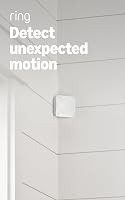
Ring Motion Detector: Best for flexible room coverage
- 90° field of view
- 9.1 m range
- Pet-friendly settings for pets under 50 lb
- No base station required
Ring offers pet-friendly settings for pets under 50 lb and a 90° field of view. It connects over Amazon Sidewalk and does not require a base station.
Pros
- Pet-friendly settings
- 90° room coverage
- No base station required
Cons
- Amazon Sidewalk is required
- Coverage may vary
Ring suits a room where you want motion alerts without adding a separate base station. It has a 90° field of view and 9.1 m range, with pet-friendly settings designed to reduce false alerts from pets under 50 lb.
Ring connects over Amazon Sidewalk, which is required for use. Coverage may vary, so check whether Sidewalk reaches the room where you plan to install the sensor.
You can also pair the sensor with a compatible Ring subscription for 24/7 Pro Monitoring. Ring says the plan has no multi-year contracts and includes emergency response for break-ins, fires and more.
Choose Ring if your pet is within the stated weight guidance and you want a sensor that does not need a base station. For room placement ideas, read our guide to where to put a SimpliSafe motion sensor.
SimpliSafe Motion Sensor: Best for SimpliSafe Gen 3 homes
- 90° field of view
- 30 ft detection range
- Reduces false alarms from pets under around 50 lb
- Peel-and-stick or included hardware setup
This sensor is made for SimpliSafe Gen 3 systems and reduces false alarms from pets under around 50 lb. It can be placed on a shelf or installed with adhesive or included hardware.
Pros
- Designed for SimpliSafe Gen 3
- Corner placement for room coverage
- Peel-and-stick setup
Cons
- Requires a compatible SimpliSafe system
- Pet guidance is approximate
SimpliSafe's motion sensor is the clearest fit for a SimpliSafe Gen 3 system. It is designed to reduce false alarms from pets under around 50 lb and uses a 90° field of view.
Its stated detection range is 30 ft in the feature description and 35 ft in the specifications. Plan around the system's placement guidance and confirm the range you need before mounting.
You can place it on a shelf, use peel-and-stick installation or mount it with the included hardware. SimpliSafe recommends a corner for maximum room coverage.
Choose this model if you already use Gen 3 and want a matching sensor. If you are comparing entry protection too, our SimpliSafe entry sensor guide explains how its door and window sensor works.
eufy Motion Sensor E20: Best for larger pets
- Pet-friendly detection for pets up to 80 lb
- Requires compatible HomeBase
- 90° field of view
- 5-year battery life under normal conditions
E20 supports pet-friendly detection for pets up to 80 lb and requires a compatible eufy HomeBase. Its battery life is stated as 5 years under normal conditions.
Pros
- Highest stated pet weight here
- 90° field of view
- Wall or corner mounting
Cons
- Requires a compatible HomeBase
- Battery life varies with use
Eufy E20 is a strong fit for homes with pets up to 80 lb, its stated pet-friendly guidance. It detects motion up to 26 ft when mounted at the recommended height, with a 90° field of view.
E20 requires a compatible eufy HomeBase: HomeBase Mini, HomeBase 2, HomeBase 3 or HomeBase Pro, each with a required software version. Check your hub model and version before you buy.
Eufy states a 5-year battery life under normal conditions, though actual life can vary with use. Mount it vertically at 6–7.5 ft, away from direct light, heat sources, windows and vents.
Choose E20 if you have a compatible HomeBase and need the highest stated pet-weight guidance in this roundup. Our glass break sensor guide explains when a separate sensor can cover a different risk.
Wyze Motion Sensor: Best for adjustable sensitivity
- Adjustable sensitivity
- 120° field of view
- 25 ft detection distance
- 18-month battery life
Wyze combines adjustable sensitivity with a 120° field of view. It requires a Wyze Home Security System Core Kit and is not a standalone sensor.
Pros
- Adjustable sensitivity
- Wide field of view
- Adhesive or screw mounting
Cons
- Requires Wyze Core Kit
- 18-month stated battery life
Wyze suits a home already using the Wyze Home Security System Core Kit. Its adjustable sensitivity and 120° field of view provide options for tuning detection, and it is designed to detect people rather than pets.
This sensor is not a standalone device. It requires the Wyze Core Kit, so check that you have the compatible system before you buy.
Wyze gives a detection distance of up to 25 ft and a stated battery life of 18 months. Adhesive backing supports wall mounting, and screws are available for added security.
Choose Wyze if you use its Core Kit and want to adjust sensitivity. If you are comparing alarm packages, review the system requirements in our home alarm kit guide.
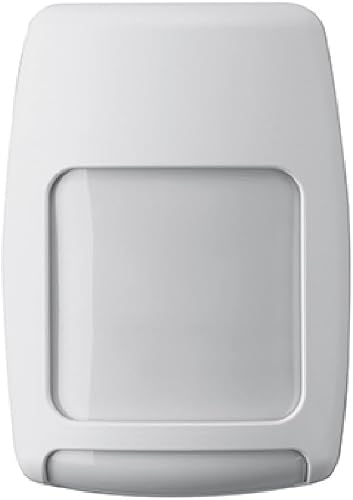
Honeywell 5800PIR-RES Wireless Motion Detector: Best for large pet coverage
- 80 lb animal immunity
- 35 x 40 ft pattern
- 7–9 ft mounting height
- Wall or ceiling mount
Honeywell specifies 80 lb animal immunity and a 35 x 40 ft pattern. Check your alarm system's compatibility before choosing it.
Pros
- Specific animal-immunity figure
- Wall or ceiling mounting
- No mounting-height adjustments
Cons
- System compatibility needs checking
- Mounting height is specified
Honeywell's 5800PIR-RES is an option for compatible alarm systems when you want a stated animal-immunity figure. It specifies 80 lb animal immunity and a 35 x 40 ft detection pattern.
The sensor is designed for mounting 7–9 ft high and supports wall or ceiling placement. Match that height and mounting position to your room before choosing it.
Choose this model if your alarm system supports it and the mounting guidance works for your space. The product details do not name a specific alarm platform, so confirm compatibility with your system documentation.
Honeywell IS2535 Pet-Immune Motion Detector: Best for selectable settings
- Selectable pet immunity
- Selectable sensitivity
- Flexible mounting
- 35 x 40 ft pattern
The IS2535 offers selectable pet immunity and sensitivity, plus flexible mounting. Confirm that your alarm system supports it before choosing.
Pros
- Selectable pet immunity
- Selectable sensitivity
- Flexible mounting
Cons
- Battery not included
- System compatibility needs checking
The Honeywell IS2535 offers selectable pet immunity and sensitivity, plus flexible mounting and a 35 x 40 ft pattern. Its adjustable choices suit buyers who need more control over how the sensor is configured.
The available details do not give a pet-weight threshold or name specific compatible systems. The battery is not included, and the stated power source is corded electric, so confirm the setup and system requirements before choosing it.
Choose the IS2535 if selectable settings are useful and your alarm system supports it. Skip it if you need a clearly stated pet-size limit or cannot confirm how it will be powered and connected.
DSC WS4904P Pet-Immune Wireless Detector: Best for DSC system owners
- Pet-immune passive infrared detection
- Wireless
- Wall mounting
- Compatible with DSC wireless alarm systems
This wireless PIR detector is compatible with DSC wireless alarm systems. Choose it after confirming your system supports this sensor.
Pros
- Pet-immune design
- Wireless PIR detection
- Wall mounting
Cons
- Compatibility limited to DSC wireless alarm systems
- Coverage details are not specified
The DSC WS4904P is a wireless PIR detector designed for DSC wireless alarm systems. Its clearest advantage is a stated system match for buyers who already use DSC.
The available details do not give a pet-weight threshold or coverage range. Confirm the exact system match and follow the system's placement instructions before planning room coverage.
Choose it if you have a compatible DSC system and want a wireless pet-immune detector. If window coverage is also a concern, see our guide to best window alarm sensors.
How do you choose a pet immune motion sensor?
Choose a pet immune motion sensor by matching the animal guidance to your household, confirming the alarm-system requirement and planning a suitable mounting position. A wide field of view can help cover a room, but placement still matters.
Which pet size should a pet immune motion sensor support?
Compare the stated pet guidance with your animal's weight and the places it uses in the room. Ring and SimpliSafe give guidance for pets under or around 50 lb, while eufy E20 and Honeywell 5800PIR-RES specify 80 lb.
Wyze describes its sensor as designed to detect people, not pets, and offers adjustable sensitivity. The Honeywell IS2535 provides selectable pet immunity without a stated weight threshold in the available details.
These figures are useful for narrowing the options, not guarantees that an animal will never trigger an alert. If your pet is near or above a model's stated guidance, consider a different sensor or a placement that keeps the animal out of its detection path.
Does the sensor work with your alarm system?
Check the hub or alarm-system requirement before comparing detection features. SimpliSafe requires a Gen 3 system, Wyze requires its Core Kit, eufy requires a compatible HomeBase, and DSC specifies DSC wireless alarm systems.
Ring does not require a base station, but it does require Amazon Sidewalk. For the Honeywell models, confirm system support with your alarm documentation or installer before buying.
A sensor that cannot pair with your alarm system will not solve the problem, even if its pet guidance and range fit the room. Write down the exact hub or panel model and check it against the sensor requirement first.
Where should you mount a pet immune motion sensor?
Mount the sensor where it can watch the room you want covered without aiming at places your pet climbs, jumps or frequently passes. Follow the model's own instructions because the field-of-view number alone does not determine coverage in your room.
Eufy advises keeping E20 vertical at 6–7.5 ft and avoiding direct light, heat sources, windows and vents. SimpliSafe recommends corner placement for its sensor, while Honeywell 5800PIR-RES specifies a 7–9 ft mounting height.
Look at the room from the sensor's planned position before attaching it. Check for furniture, doorways or tall objects that could block the intended detection area, and account for your pet's usual routes.
How do you set up a pet immune motion sensor?
Set up a pet immune motion sensor by confirming the system connection first, then choosing a mounting spot and following the model's installation steps. App or hub setup differs by brand, so use the instructions for your exact system.
For Ring, make sure Amazon Sidewalk is available where you plan to use the sensor. SimpliSafe supports shelf placement, peel-and-stick installation or included mounting hardware, while Wyze offers adhesive mounting or screws.
Eufy E20 needs a compatible HomeBase with the required software version. The Honeywell and DSC options are system-specific enough that you should confirm compatibility before mounting or buying accessories.
After installation, arm the system as you normally would and observe whether the sensor covers the intended area. If alerts happen when your pet moves, adjust sensitivity when available or reposition the sensor according to its instructions.
What mistakes cause false alerts from pets?
The most common setup mistake is aiming a sensor at a place where a pet climbs or moves at a height the sensor can detect. A pet immune setting helps reduce false alerts, but it does not make placement irrelevant.
For E20, eufy specifically advises avoiding stairs or furniture your pet could climb. It also warns against direct light, heat sources, windows and vents, and recommends a vertical mount above 6 ft.
Another mistake is assuming that a pet-weight figure applies to every room and animal movement. A pet jumping onto furniture or moving through a different part of the sensor's view can behave differently from a pet walking across the floor.
Do not buy a system-specific sensor before checking your hub or panel. Confirm the exact model requirement, and for Ring, remember that Amazon Sidewalk is required and coverage may vary.
Are pet immune motion sensors enough for home security?
Pet immune motion sensors can reduce alerts caused by animals, but they only detect movement in the area they cover. Add door or window sensors where you want alerts tied to those entry points.
For a layered setup, read our guides to door alarm sensors and glass break sensors. Those sensors cover different events from room motion detection.
Which pet immune motion sensor should you choose?
Choose Ring if you want flexible room coverage without a base station and your pet fits its under-50-lb guidance. Choose eufy E20 for pets up to 80 lb if you already have a compatible HomeBase.
If your home already uses SimpliSafe Gen 3, Wyze Core Kit or DSC wireless alarms, start with that system's matching sensor. Compare the mounting instructions with your room, then follow the setup guidance to reduce avoidable alerts.
Our top 3 picks at a glance
-
1
-
2
-
3
Frequently asked questions
What does pet immune mean on a motion sensor?
A pet immune motion sensor is designed to reduce alerts caused by pets, but the weight guidance and method differ by model. Ring gives settings for pets under 50 lb, while eufy E20 specifies pets up to 80 lb.
Placement and system compatibility still matter, so follow the instructions for the sensor you choose.
Which pet-immune motion sensor is best for a large dog?
The eufy Motion Sensor E20 gives the highest stated pet guidance here, for pets up to 80 lb. Honeywell's 5800PIR-RES also specifies 80 lb animal immunity.
Check each sensor's alarm-system requirements and mounting instructions before choosing it for a room your dog uses.
Can a pet-immune sensor still trigger an alarm?
Yes. Pet-immune settings reduce alerts from pets within the sensor's stated guidance, but they don't promise that every animal movement will be ignored.
For eufy E20, the instructions advise avoiding stairs or furniture pets could climb and keeping the sensor vertical above 6 ft.
Do pet-immune motion sensors work with any alarm system?
No. Several picks require a matching alarm system or hub: SimpliSafe Motion Sensor works with SimpliSafe Gen 3, Wyze requires its Core Kit, and eufy E20 needs a compatible HomeBase.
Check compatibility before buying.
Our DIY alarm systems guide explains how system components fit together.