8 Best Self-Monitored Alarm Systems (November 2026)
The best self-monitored home alarm systems include the tolviviov WiFi Door Alarm System for most homes, the PGST Alarm System for Home Security for 4G backup, and the Ring Alarm 8-Piece Kit (2nd Gen) for optional pro monitoring.
On this page (7 sections)
- How we compared these self-monitored kits
- Best self monitored alarm systems for different homes
- Do self-monitored systems call the police for you?
- Is WiFi enough, or do you need cellular backup?
- How many sensors does a typical home need?
- What should you check before you buy a self-monitored kit?
- Which self-monitored alarm system should you buy?
The best self-monitored alarm system for most homes is the tolviviov WiFi Door Alarm System, an 8-piece kit with app alerts, voice control and no monthly fee. It covers a typical apartment or small house without a contract, and you can add sensors as you go.
If your internet drops out often, the PGST 24-piece kit is the stronger choice because it falls back to a SIM card's 4G network. For a bigger house or an optional monitoring plan later, look at the Ring kits.
Every kit on this list reports to your phone and lets you decide what happens next. That's the core of the best self monitored alarm systems: you keep the alerts and skip the monthly bill.
Our picks at a glance
-
1

-
2

-
3

- 4
 Check it
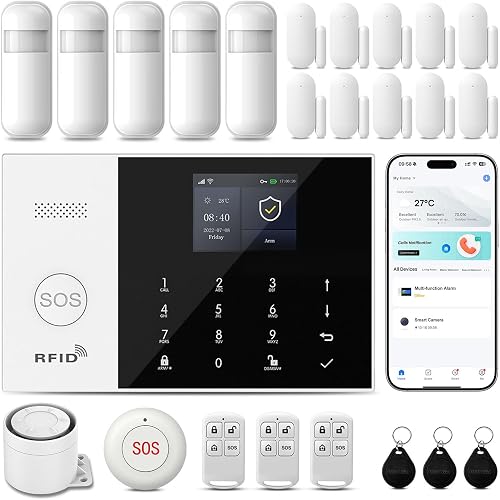
PGST Alarm System for Home Security
Best for fast setup - 5
 Best for larger homesCheck it
- 6
 Check it
DEEPVIGLX Home Security System
Best for a touchscreen panel - 7
 Best for a large touchscreenCheck it
- 8
 Check it
eufy 7-Piece Essential Alarm System
Best for local storage
How we compared these self-monitored kits
We checked each kit's specs and features against what a self-monitoring buyer needs: no contract, app alerts and a kit that covers the doors and windows you actually have. Scores weigh connectivity, kit contents, expansion room and control options.
The first four picks share one trait: none of them requires a monthly fee to send you alerts. That's the line we drew for this list.
A kit that only works with a paid plan didn't make the cut.
We also weighed how each kit handles a failure. A WiFi-only system goes quiet when your router does.
A dual-network kit keeps working on cellular, which matters more in some homes than in others.
The Ring kits sit slightly lower because their best features, like voice arming and cellular backup, need a Ring Protect plan. They earn their place for buyers who want the option to add professional monitoring later.
Their free tier still covers the basics, with app notifications when a sensor triggers.
| Product | Best for | Kit size | Connectivity | Control | Our score |
|---|---|---|---|---|---|
| tolviviov WiFi Door Alarm System | most homes | 8 pieces | 2.4GHz WiFi | App, remote, voice | 9.3 |
| PGST Alarm System for Home Security | 4G backup | 24 pieces | 2.4GHz WiFi plus 4G | App, remote, voice | 9.2 |
| Ring Alarm 8-Piece Kit (2nd Gen) | optional pro monitoring | 8 pieces | WiFi | Keypad, app, voice | 9.0 |
| PGST Alarm System for Home Security | fast setup | 24 pieces | 2.4GHz WiFi plus 4G | App, remote, voice | 8.7 |
| Ring Alarm 14-Piece Kit | larger homes | 14 pieces | WiFi | Keypad, app, voice | 8.6 |
| DEEPVIGLX Home Security System | a touchscreen panel | 8 pieces | WiFi and GSM | App, remote, touch, voice | 8.1 |
| PGST Home Security System | a large touchscreen | Hub with accessories | 2.4GHz WiFi plus 2G/3G/4G | App, remote | 8.0 |
| eufy 7-Piece Essential Alarm System | local storage | 7 pieces | Wireless | Keypad, app | 7.7 |
Best self monitored alarm systems for different homes
tolviviov wins for most people because it's simple, affordable and expandable. The rest of the list solves specific problems: weak WiFi, bigger floor plans, a panel you can touch and local storage.
None of them needs a contract to send you alerts.
tolviviov WiFi Door Alarm System: Best for most homes
- 8-piece kit: 1 siren station, 5 door/window sensors, 2 remotes
- 2.4GHz WiFi only, no 5GHz
- No contracts and no monthly fee
- Expands to 20 sensors and 5 remotes/keypads
An affordable 8-piece kit with app alerts, voice control and room to add sensors. It's the simplest no-fee starting point for an apartment or small house.
Pros
- No contracts or monthly fee
- Expands to 20 sensors
- Voice control for Away, Disarm and Home modes
Cons
- WiFi only, no cellular backup
- 2.4GHz networks only
tolviviov suits an apartment or small house where you want app alerts without a subscription. The 8-piece kit includes one siren station, five door and window sensors and two remote controls.
It runs on 2.4GHz WiFi and sends instant notifications to your smartphone when a sensor triggers.
The system supports expansion to 20 sensors and 5 remotes or keypads. You can add motion detectors, a wireless doorbell or water detectors room by room.
Away, Disarm and Home modes work by voice as well as the app or remote.
Setup is adhesive and tool-free. The alarm station stays plugged into its AC adapter, and the backup battery covers about 8 hours as an emergency supply.
At 1.1 pounds and roughly 9 by 7 inches, the station is small enough for a shelf or side table.
The trade-off is connectivity. It's WiFi only, so a router outage means no app alerts.
If that's a real risk in your area, pay for a 4G backup kit instead. For everyone else, this is the easiest no-fee start.
Read our DIY alarm system guide for what else to plan.
PGST Alarm System for Home Security: Best for 4G backup
- 24-piece kit
- WiFi plus 4G dual network
- 120 dB siren
- Tamper protection and portable SOS
A large kit that keeps reporting when WiFi fails by switching to a SIM card's 4G network. Tamper protection and a portable SOS button suit families with older relatives.
Pros
- Automatic 4G fallback when WiFi is offline
- Tamper protection with code-only disarm
- Portable SOS device and remote
Cons
- Needs a SIM card for 4G
- 5GHz WiFi not supported
This PGST kit suits homes where WiFi isn't dependable. It supports 2.4GHz WiFi and a 4G network, and it switches to the SIM card's 4G connection automatically when WiFi goes offline.
The kit holds 24 pieces, including a portable SOS device and a remote with the same function.
Tamper protection is the feature that stands out. Removing the hub without authorization triggers an alarm that only the correct security code can silence.
That suits a ground-floor flat or a home with a lot of foot traffic past the door. The alarm reaches 120 dB.
Voice control through Alexa and Google Assistant lets you arm or disarm hands-free. Through the Smart Life or Tuya app you can check status remotely, read the event history and share access with family members so more than one person monitors the home.
The trade-off is the SIM card. Cellular backup needs one, and in-app SMS or phone alerts can carry third-party fees.
Keep the app notifications as your main alert channel and add a SIM only if you want the fallback. Our WiFi vs cellular comparison explains when that's worth it.
Ring Alarm 8-Piece Kit (2nd Gen): Best for optional pro monitoring
- 8-piece kit for 1-2 bedroom homes
- Base station, keypad, 4 contact sensors, motion detector, range extender
- Optional Ring Protect plan for 24/7 monitoring
- Alexa voice arming with a plan
A keypad-based kit that works self-monitored out of the box and lets you add professional monitoring later. The range extender helps in homes where the base station sits far from sensors.
Pros
- Keypad plus app control
- Range extender included
- Optional professional monitoring if you change your mind
Cons
- Alexa voice arming needs a Ring Protect plan
- Plan required for cellular backup
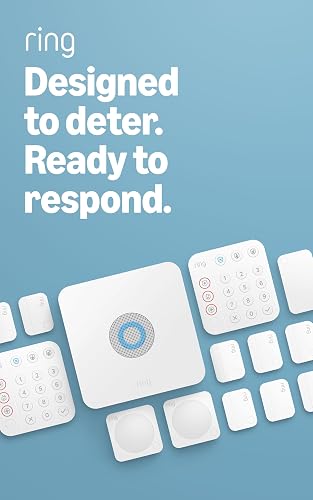
Ring's 8-piece kit suits a 1-2 bedroom home that may want professional monitoring later. It includes a base station, keypad, four contact sensors, a motion detector and a range extender.
Self-monitored, free self-monitoring covers keypad arming and app notifications. Arming from the app requires a Ring Protect plan.
The keypad is the practical difference. Household members who don't want to open an app can arm and disarm at the door.
The range extender helps when the base station sits in a back room and sensors sit at the front of the house. Everything runs through the Ring app alongside any other Ring devices you own.
The range of optional services is the catch. Voice arming through Alexa needs a Ring Protect plan, and so does arming from anywhere or keeping the system online when WiFi fails.
Self-monitoring is free, but the extra features aren't. Those optional services include 24/7 professional monitoring for police, fire and medical response.
Choose it if you want a keypad and a path to a monitored plan without changing hardware. Skip it if you want every feature included at no monthly cost.
Our no-monitoring guide covers what you keep when you skip the plan.
PGST Alarm System for Home Security: Best for fast setup
- 24-piece kit
- No pairing required
- WiFi plus 4G dual network
- Scheduled auto arm and disarm
PGST's pre-paired kit skips the pairing step and adds app schedules for arming at bedtime and disarming in the morning. Good for a busy household that wants alerts without a contract.
Pros
- No pairing required out of the box
- Automatic arm and disarm schedules
- 120 dB siren and SOS device
Cons
- Screw-in installation takes longer than adhesive
- 5GHz WiFi not supported
This PGST kit suits a household that wants alerts running within minutes. The pieces come pre-paired, so setup skips the usual pairing step.
It's also a 24-piece kit with WiFi and 4G dual-network support and a 120 dB siren. It uses the same Smart Life or Tuya app as the other PGST pick, so access sharing and event history work the same way.
Scheduled arming is the feature to know. You can set the system to arm at bedtime and disarm in the morning through the app, so nobody has to remember.
The portable SOS device and remote both trigger an immediate alert, which suits homes with older relatives or children. The hub, door sensor and motion detector are included, with two remotes and two RFID cards.
The trade-off is installation. The sensors use screw-in mounting, which takes longer than adhesive strips and leaves holes.
Pick the tolviviov if you rent or want the fastest install. Pick this one if you want pre-pairing and schedules more than a five-minute setup.
Our install guide walks through both methods.
Ring Alarm 14-Piece Kit: Best for larger homes
- 14-piece kit for 2-4 bedroom homes
- Base station, 2 keypads, 8 contact sensors, 2 motion detectors, range extender
- Optional Ring Protect monitoring
- Alexa voice arming with a plan
The bigger Ring kit covers more doors and windows with two keypads for separate entry points. It's the pick when one 8-piece kit would leave gaps.
Pros
- 8 contact sensors and 2 motion detectors
- Two keypads for two entries
- Self-monitored at no monthly cost
Cons
- Higher upfront cost than the 8-piece kit
- Plan required for professional monitoring
Ring's 14-piece kit suits a 2-4 bedroom home with several entries to cover. It includes a base station, two keypads, eight contact sensors, two motion detectors and a range extender.
The sensor count is what makes the difference: eight doors or windows plus two motion zones cover more of the house than an 8-piece kit.
Two keypads matter in a home with a front and a back door. You can arm on the way out of either one without walking to a single panel.
Like the smaller Ring kit, it's self-monitored at no monthly cost out of the box. You can add more sensors and accessories at any time as your needs grow.
The same plan caveat applies. Ring Protect adds professional monitoring, remote arming and cellular backup, and voice arming through Alexa needs a subscription too.
Those are optional, not required for app alerts. Without the plan, you still get mobile notifications and can monitor your Ring devices in the app.
Choose this kit if one 8-piece set would leave windows or a side door uncovered. Skip it for an apartment where the extra sensors would sit in a drawer.
The smaller Ring kit covers 1-2 bedrooms for less. Both kits expand with add-on sensors.
DEEPVIGLX Home Security System: Best for a touchscreen panel
- 8-piece kit with 2.4-inch touchscreen panel
- 120 dB siren
- 2 remotes and 2 RFID tags
- Alexa compatible
A kit built around a touchscreen control panel that shows temperature and weather alongside alarm status. Suits buyers who want a visible panel instead of a phone-only setup.
Pros
- Touchscreen panel with status and weather
- RFID tags for quick disarm
- Siren rated at 120 dB
Cons
- Only 1 door/window sensor in the kit
- Screw-in or adhesive mounting needed per sensor
DEEPVIGLX suits buyers who want a panel they can see and touch. The hub has a 2.4-inch full HD touchscreen that shows real-time temperature and weather beside the alarm status.
The 8-piece kit adds one motion sensor, one door or window contact, two remotes, two RFID tags and a siren.
RFID tags are a nice touch for quick disarming without typing a code. The 120 dB siren and voice control through Alexa cover alerts and hands-free arming.
The touchscreen menu is graphical, so status and settings sit in front of you rather than in an app. The kit runs on 2.4GHz WiFi and GSM, with a USB Type C connector.
The kit is thin on sensors. One door or window contact won't cover a typical apartment's entry points, so plan on adding sensors from the start.
The touchscreen and weather display are pleasant, but they don't replace coverage. The panel carries a 1 year manufacturer warranty.
Choose it if a visible, touchscreen panel fits how your household uses an alarm. Pick the tolviviov instead if you'd rather spend the budget on sensors than on a screen.
The kit's stated battery life also means fewer swaps.
PGST Home Security System: Best for a large touchscreen
- 4.3-inch full touchscreen panel
- WiFi plus 2G/3G/4G
- Physical anti-tamper and password lock
- 12+ month sensor battery life
PGST puts a 4.3-inch color touchscreen on the hub and states 12+ months of battery life for the sensors. A good fit for a villa or apartment where you want the panel to be the main control.
Pros
- Large 4.3-inch color touchscreen
- Sensors rated for 12+ months of battery
- Anti-tamper with password lock
Cons
- SIM card needed for cellular features
- Higher upfront price than basic kits
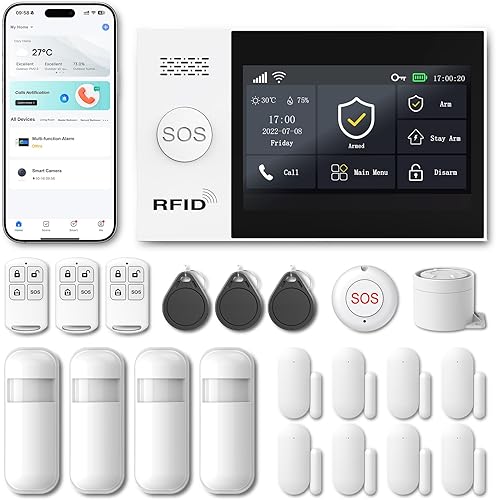
PGST's touchscreen model suits a villa or larger apartment where the panel is the main control. The 4.3-inch full-touch color display shows the status bar, data and clock clearly, and the menu supports several languages.
The system supports 2.4GHz WiFi plus 2G, 3G and 4G networks. Its maximum stated range is 100 meters.
Battery life is a practical strength. PGST states 12+ months on the CR2450 door sensor and AAA motion detector, and the hub sends a low-power alert when a battery runs down.
Physical anti-tamper and a password lock stop anyone from silencing a forced-removal alarm. Once the screen lock is on, only the correct password will stop the alarm.
The cellular side needs a SIM card for telephone and SMS service. App notifications work without one, and the alarm system itself carries no fee.
That's the key point for a self-monitoring buyer.
Choose it for the large screen and long battery life. Skip it if a screen isn't worth the higher upfront cost over the tolviviov kit.
The tolviviov kit covers more doors for the money.
eufy 7-Piece Essential Alarm System: Best for local storage
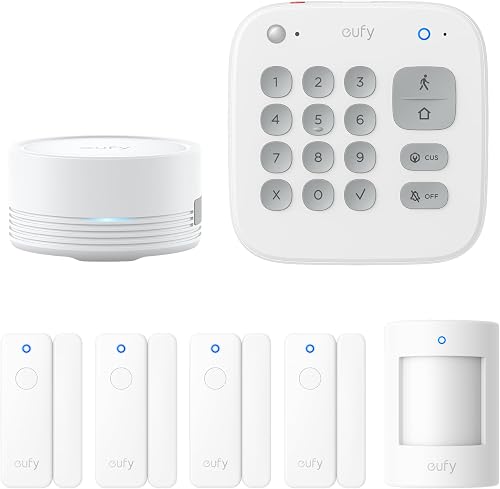
- 7-piece kit: HomeBase Mini with 64GB storage, keypad, 4 entry sensors, motion sensor
- No monthly fee
- Free app alerts
- Expands with eufy sensors
eufy keeps alarm data on a HomeBase Mini with 64GB of local storage, so nothing needs a cloud subscription. The kit covers four entry points with a keypad and a motion sensor.
Pros
- 64GB local storage in the HomeBase Mini
- No monthly fee or lock-in
- Step-by-step in-app setup
Cons
- Fewer sensors than the PGST 24-piece kit
- No stated cellular backup
eufy suits buyers who want their alarm data kept at home. The 7-piece kit includes a HomeBase Mini with 64GB of local storage, a keypad, four entry sensors and one motion sensor.
There's no monthly fee and no lock-in, and the app sends alerts when activity is detected.
The kit covers four entry points plus a motion zone, which fits a small house or a flat with a front and back door. Setup is in-app with step-by-step guidance and no wiring.
You can add eufy sensors later as your needs grow. The HomeBase Mini also works with selected compatible eufy cameras and doorbells, so a mixed setup can share one hub.
The trade-off is coverage and backup. The PGST 24-piece kit gives you far more sensors for a similar outlay, and eufy doesn't state cellular backup for this kit.
That leaves the HomeBase dependent on your home network for remote alerts. The keypad is USB rechargeable and lasts about 6 months per charge.
Choose eufy if local storage and a no-fee setup matter most. Pick a PGST kit instead if you want more sensors or a 4G fallback.
Do self-monitored systems call the police for you?
No. A self-monitored system alerts you, and you decide whether to call emergency services.
A professionally monitored plan routes the alarm to a monitoring center that contacts the police, fire or medical services.
That's the main thing to understand before buying. The best self monitored alarm systems put the decision in your hands.
If you're away from your phone a lot or want a guaranteed response, add a monitoring plan or pick a kit that supports one later, like Ring. The Ring Protect plan also covers arming from anywhere and keeping the system online when WiFi goes down.
Is WiFi enough, or do you need cellular backup?
WiFi alone is enough in most homes with a stable connection. Add cellular backup when your internet drops often, when you travel and want alerts to keep working, or when the alarm protects a building you don't live in.
A dual-network kit like either PGST pick switches to 4G automatically when WiFi fails. That's the difference between an alarm that goes silent during an outage and one that keeps reporting.
Check that a kit supports 2.4GHz WiFi, since many of these systems don't work on 5GHz networks.
When to choose a WiFi-only kit
Pick WiFi-only if you have reliable internet and a router that stays on during short outages. You'll pay less upfront and avoid a SIM card or data plan. tolviviov and the Ring kits fit this pattern.
A backup battery like tolviviov's 8 hour emergency supply bridges short power cuts.
When to choose a dual-network kit
Choose WiFi plus 4G if outages are common or you want alerts while traveling. The PGST kits support both, and you'll need a SIM card for the cellular side.
Factor in the cost of that card when you compare kits. The PGST touchscreen model adds 2G and 3G support on top of 4G.
How many sensors does a typical home need?
A one-bedroom apartment usually needs 3 to 5 entry sensors for the front door and main windows. A three-bedroom house with a back door and a garage often needs 7 to 10, plus one or two motion detectors for hallways.
Count your ground-floor doors and windows first. That's the coverage that matters most.
Then check each kit's expansion limit so you can add sensors later without replacing the hub. tolviviov allows up to 20 sensors and 5 remotes or keypads. The Ring kits expand with add-on sensors, and eufy grows with its own range.
What the kit includes matters more than the count
A 24-piece kit can still leave a door uncovered if most pieces are remotes and tags. The PGST 24-piece kit includes one door sensor and one motion detector among its pieces.
Read the contents list, not just the piece count. An 8-piece kit with five contact sensors covers more entries than a 24-piece kit with one.
Plan for expansion before you buy
Buy a kit with room to grow if you're renting now and may move to a bigger place. Ring and eufy sell add-on sensors.
A hub with a low expansion limit locks you into the original coverage. Check whether add-on sensors use the same app and network before you commit.
What should you check before you buy a self-monitored kit?
Check three things: how the kit connects, what's in the box and how you'll arm it. Those three decide whether a kit fits your home more than any single feature.
The control method matters as much as the sensor count.
Connectivity and backup
Look for 2.4GHz WiFi support and note whether the kit offers cellular fallback. A kit that needs 5GHz won't connect on a 2.4GHz-only network.
If you want backup, confirm the kit takes a SIM card. Dual-network models here state automatic switching when WiFi drops.
Control methods
Decide whether you want a keypad, a touchscreen panel, a remote, voice control or just the app. Keypads suit households with people who don't carry a phone.
Touchscreens show status at a glance. Remotes and RFID tags are handy for quick disarm.
Voice control works through Alexa and Google Assistant on several kits here.
Mounting and power
Adhesive mounting leaves no holes and suits rentals. Screw-in mounting holds better on rough surfaces but takes longer.
Check what powers the hub: most kits here need a constant AC connection, with the battery as an emergency supply only. tolviviov's backup battery covers about 8 hours. The eufy keypad is USB rechargeable and lasts about 6 months per charge.
Which self-monitored alarm system should you buy?
Buy the tolviviov 8-piece kit if you want the simplest no-fee setup for an apartment or small house. Its adhesive install, voice control and room for 20 sensors make it the best self-monitored alarm system for most readers.
Choose a PGST kit if your WiFi is unreliable and you want 4G backup. Pick the 24-piece version for tamper protection and the pre-paired one for quick setup and schedules.
For a larger home with an eye on professional monitoring later, the Ring 14-piece kit covers more entries with two keypads. For local storage and no fee at all, eufy is the pick.
Whichever you choose, count your doors and windows first. A smaller kit that covers your entries beats a larger one with sensors left in the box.
Check the app and control options too, since those decide how easy the system is to live with day to day.
Our top 3 picks at a glance
-
1
-
2
-
3
Frequently asked questions
Do self-monitored alarm systems work without WiFi?
Some do. A WiFi-only kit stops sending app alerts when your internet drops.
A dual-network kit like the PGST models switches to a SIM card's 4G signal and keeps reporting.
If you live somewhere with unreliable internet, pick a kit with cellular backup.
Can I add more sensors to a self-monitored kit later?
Yes, on most kits here. tolviviov supports up to 20 sensors and 5 remotes or keypads. Ring and eufy sell add-on sensors too.
Check the kit's stated expansion limit before buying so you don't run out of room as your home grows.
Is a self-monitored alarm system enough for a rental?
Usually yes. Adhesive-mounted sensors leave no holes, and there's no contract to cancel when you move. tolviviov and the touchscreen PGST kit use self-adhesive mounting; the pre-paired PGST kit uses screw-in mounting.
Take the hub and sensors with you and set them up in the next place.
What happens during a power cut with a self-monitored kit?
The hub's backup battery keeps the system running for a short time. tolviviov states 8 hours on its backup battery, used only as an emergency supply. Plan for how you'll get alerts if the outage lasts longer than that.
How long do the sensors' batteries last?
It varies by kit. eufy states up to 5 years for its entry and motion sensors. PGST states 12+ months on its CR2450 door sensor and AAA motion detector.
Check each kit's battery type when you plan replacements.


