8 Best Wireless Driveway Alarms (October 2026)
The best wireless driveway alarms include the HTZSAFE Driveway Alarm (2 Sensors) for two-zone homes, the Mighty Mule FM231 Driveway Alarm for vehicle arrivals, and the eMACROS Solar Driveway Alarm (1 Sensor) for one sunny entrance.
On this page (8 sections)
- How we chose the best driveway alarms
- Compare the best wireless driveway alarms
- The best driveway alarms by use
- What should you check before choosing among the best driveway alarms?
- How do you set up a wireless driveway alarm?
- What mistakes lead to missed alerts or false alarms?
- How should you care for and use a driveway alarm?
- Which driveway alarm should you choose?
The HTZSAFE Driveway Alarm (2 Sensors) is a strong choice among the best driveway alarms for most homes because it pairs two adjustable motion sensors with a plug-in receiver and 35 melody choices. For vehicle detection, choose Mighty Mule; for solar charging, consider eMACROS.
A driveway alarm gives you a local alert when a sensor detects activity near an approach, gate or path. It doesn't replace a full home alarm system, but it can let you know when someone or a vehicle reaches an area you can't see.
If you're comparing other outdoor entry points, see our guides to door alarms for home security and window alarm sensors. The shed and garage alarm guide covers related outbuildings.
Our picks at a glance
-
1

-
2
-
3
 Best for one sunny entrance
eMACROS Solar Driveway Alarm (1 Sensor)
7.9/10 our score
See it on Amazon
- 4
 Check it
eMACROS Solar Driveway Alarm (2 Sensors)
Best for solar coverage - 5
 Check it
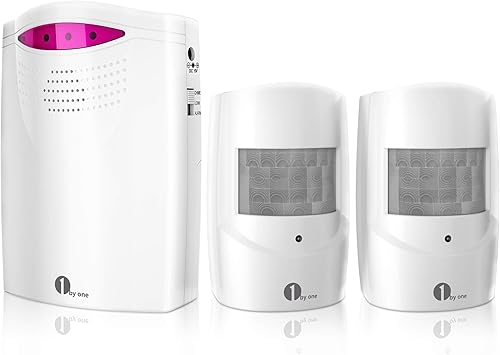
1byone Driveway Alarm (36 Melodies)
Best for chime variety - 6
 Check it
1byone Driveway Alarm (2 Sensors)
Best for visual alerts - 7
 Best for color-coded zonesCheck it
- 8
 Best for rechargeable powerCheck it
How we chose the best driveway alarms
The best driveway alarms match their detection method, sensor count and receiver range to the area you want to monitor. We compared features for detection type, power, expandability and alert options.
A motion sensor can detect people, vehicles and animals, depending on the model and its sensitivity. An electromagnetic sensor such as the Mighty Mule FM231 is intended to detect vehicles, which can reduce alerts from pedestrians or animals.
Wireless range figures describe communication between sensor and receiver under stated conditions. Walls, trees, terrain and other obstacles can affect the signal, so plan the receiver location and check the connection from the sensor's final position.
Compare the best wireless driveway alarms
The HTZSAFE includes two sensors and offers flexibility for separate motion zones in this group. Mighty Mule focuses on vehicle detection, while solar picks reduce reliance on disposable batteries.
| Product | Best for | Sensors | Wireless range | Power | Our score |
|---|---|---|---|---|---|
| HTZSAFE Driveway Alarm (2 Sensors) | two-zone homes | 2 motion sensors | Up to 1/2 mile, terrain dependent | AA batteries for sensors; plug-in receiver | 8.7 |
| Mighty Mule FM231 Driveway Alarm | vehicle arrivals | Up to 400 ft | 2 AA batteries, not included | 8.2 | |
| eMACROS Solar Driveway Alarm (1 Sensor) | one sunny entrance | 1 motion sensor | Solar powered | 7.9 | |
| eMACROS Solar Driveway Alarm (2 Sensors) | solar coverage | 2 motion sensors | Solar powered with rechargeable batteries | 7.6 | |
| 1byone Driveway Alarm (36 Melodies) | chime variety | 2 PIR detectors | 7.5 | ||
| 1byone Driveway Alarm (2 Sensors) | visual alerts | 2 infrared motion sensors | 7.4 | ||
| TECKNET Solar Driveway Alarm | color-coded zones | Up to 1/2 mile | Solar charged | 7.2 | |
| Wuloo Solar Driveway Alarm | rechargeable power | Up to 1/3 mile | Solar with rechargeable battery | 7.1 |
The best driveway alarms by use
Each alarm here fits a different driveway layout, power preference or type of activity. Match the sensor to what should trigger an alert before choosing by range or chime options.
HTZSAFE Driveway Alarm (2 Sensors): Best for two-zone homes
- 1 receiver and 2 sensors
- Wireless transmission up to 1/2 mile in ideal conditions
- 35 ft or 50 ft motion detection settings
- 35 melodies and 4 volume levels
Two sensors can cover separate approaches, and different melodies can help you tell which one detected motion. Sensitivity adjusts between 35 ft and 50 ft.
Pros
- Two sensors included
- 35 melody choices
- Expandable up to 32 sensors
Cons
- AA batteries are not included
- Wireless range varies with terrain
HTZSAFE is a flexible starting point for a home with a driveway plus a second approach, such as a side gate or garage entrance. The kit includes two motion sensors, and its receiver supports different melodies for each sensor to help identify where motion occurred.
The sensors have two sensitivity settings: 35 ft and 50 ft. Use the lower setting to focus on a closer zone or the higher one when you need wider coverage.
The receiver plugs into an outlet and offers four volume levels. Each sensor uses three AA batteries, which aren't included, and the system can expand to as many as 32 sensors.
HTZSAFE states wireless transmission up to 1/2 mile, with actual range varying by terrain. Check reception from the receiver's planned location.
Choose it for two monitored areas and flexible chimes. If your main goal is vehicle detection, the Mighty Mule uses a different sensing method.
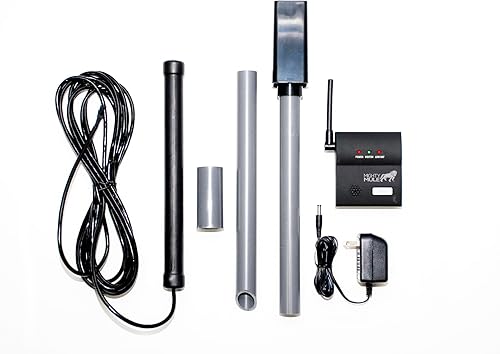
Mighty Mule FM231 Driveway Alarm: Best for vehicle arrivals
- Electromagnetic vehicle detection
- Indoor receiver with audible chime
- Wireless range up to 400 ft
- Buried sensor powered by 2 AA batteries
Its electromagnetic sensor detects vehicles instead of general motion, which can help avoid alerts from pedestrians and animals. The sensor is installed beside the driveway.
Pros
- Vehicle detection rather than general motion
- Low battery indicator
- Additional receivers can be added
Cons
- Sensor is installed beside the driveway
- Wireless range is shorter than several motion picks
Mighty Mule suits a driveway where you want an alert for vehicles rather than every person or animal passing the sensor. Its electromagnetic sensor detects large metal objects such as cars and is buried beside the driveway.
The indoor receiver sounds a chime when it detects a vehicle. Wireless range is up to 400 ft, so consider the distance and obstacles between the sensor and the room where you want to hear alerts.
The transmitter uses two AA batteries, which aren't included, and has a low battery indicator. You can add indoor receivers, sold separately, to hear alerts in more than one area.
Skip it if you also need alerts for people walking through a gate or along a path. A motion sensor model such as HTZSAFE or 1byone is a better match for general movement.
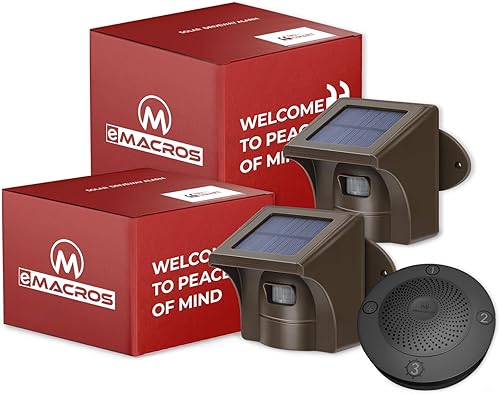
eMACROS Solar Driveway Alarm (1 Sensor): Best for one sunny entrance
- 1 receiver and 1 solar-powered sensor
- Wireless range up to 1/2 mile
- 20 ft or 30 ft motion detection settings
- Expandable up to 64 sensors
This single-sensor setup suits one approach where solar charging is practical. The sensor detects people, vehicles and large animals.
Pros
- Solar charging
- Adjustable sensitivity
- Expandable system
Cons
- Only one sensor included
- Range depends on open conditions and terrain
The single-sensor eMACROS set fits one approach where solar charging is practical. Its outdoor sensor detects people, cars and large animals, and sensitivity adjusts between 20 ft and 30 ft.
The system uses a plug-in receiver and requires no trenching or electrical wiring. eMACROS states wireless range up to 1/2 mile; open space and local conditions can affect the signal between sensor and receiver.
One sensor keeps setup focused on one entrance, such as a driveway. The system can expand to as many as 64 sensors.
Choose this version if one zone is enough and you want a solar-powered sensor. Skip it if you need two locations covered from the start; the two-sensor eMACROS set includes another detector.
eMACROS Solar Driveway Alarm (2 Sensors): Best for solar coverage
- 1 receiver and 2 solar-powered sensors
- Wireless range up to 1/2 mile in open areas
- 20 ft or 30 ft motion detection settings
- No Wi-Fi or app connection
Two solar sensors can monitor separate areas without trenching or wiring. It works as a standalone local alert system, without Wi-Fi, Bluetooth or app control.
Pros
- Two solar-powered sensors
- Adjustable sensitivity
- No Wi-Fi setup
Cons
- Needs sunlight for solar charging
- No phone app or Bluetooth
This eMACROS kit includes two solar-powered sensors and one receiver, making it a fit for a driveway with a separate side entrance or detached garage approach. Each sensor has adjustable motion sensitivity, with 20 ft and 30 ft settings.
It doesn't require Wi-Fi, Bluetooth or app control. The sensors send alerts to the receiver as a local system, so place the receiver where you'll notice it and within wireless range.
eMACROS states a wireless range up to 1/2 mile in open areas. Trees, buildings and other obstacles can change signal range at your property, so check reception after placing each sensor.
Pick this set for two solar zones and local alerts. If you want a wider choice of sounds and visual alert modes, compare the 1byone 36-melody model below.
1byone Driveway Alarm (36 Melodies): Best for chime variety
- 2 PIR motion detectors
- Wireless communication up to 1,000 ft in ideal conditions
- 36 chimes
- Sound, LED flash or both
Choose from 36 chimes and three alert modes to make driveway notifications easier to distinguish. The sensors can also monitor a porch, gate or walkway.
Pros
- Two sensors included
- 36 chimes
- Expandable to 5 sensors per receiver
Cons
- Motion detection reaches up to 24 ft
- Sensors should be protected from direct rain and sunlight
1byone's 36-melody system is useful when a standard chime is easy to confuse with other household sounds. Its two PIR detectors can trigger sound, an LED flash or both, with three volume levels.
Each sensor detects motion up to 24 ft away, and communication range is up to 1,000 ft under ideal conditions. The sensors can be mounted on a wall, fence post, tree or other surface, but should be protected from direct rain and sunlight.
A receiver can pair with up to five sensors, so you can add coverage for a gate or walkway. Different chimes can help distinguish monitored areas when you use more than one sensor.
Choose it for melody variety and visual alerts. Skip it if the sensor must reach beyond 24 ft; a model with a longer detection zone will suit a wider approach better.
1byone Driveway Alarm (2 Sensors): Best for visual alerts
- 2 infrared motion sensors
- Wireless communication up to 1,000 ft in ideal conditions
- Sound, LED flash or both
- Expandable to 5 sensors
This two-sensor set offers a choice of audible, visual or combined alerts. Use it for a driveway and another nearby approach within sensor range.
Pros
- Two sensors included
- Three alert modes
- Expandable to 5 sensors
Cons
- Motion detection reaches up to 24 ft
- No 36-chime selection
This 1byone model also includes two infrared motion sensors, but it centers on three alert modes rather than a stated 36-chime selection. You can set the receiver to sound, flash its LED or do both when motion is detected.
The sensors detect movement up to 24 ft away and communicate with the receiver up to 1,000 ft under ideal conditions. The system can expand to five sensors, with additional receivers for other areas of the home or garage.
Use it where you want both sound and light, or where a visual signal helps when you're in a noisy room. Placement matters if people or animals pass nearby often.
Choose this version if the alert mode matters more than an extensive melody library. Skip it if you want to identify zones through many chime choices; the other 1byone pick offers 36.
TECKNET Solar Driveway Alarm: Best for color-coded zones
- Solar-powered motion sensor
- Wireless signals up to 1/2 mile
- 16 ft or 33 ft sensitivity settings
- 36 melodies, 5 volumes and 4 alert zones
Four alert zones and colored receiver lights help distinguish areas when paired with compatible sensors. The rotating bracket lets you adjust the sensor's angle.
Pros
- Solar charging
- Five volume levels
- Rotating sensor bracket
Cons
- Solar charging depends on access to light
- Wireless range can vary with obstacles
TECKNET pairs a solar-charged motion sensor with a receiver that offers four alert zones, five volume levels and 36 melodies. Colored receiver lights provide a visual cue, and different zones can use different ringtones.
The sensor's rotating bracket lets you adjust its direction. Its two sensitivity settings cover 16 ft or 33 ft, while wireless signals can transmit up to 1/2 mile.
Solar charging depends on the sensor receiving enough light, so account for shade when choosing a mounting spot. This set suits people who want zone cues and several alert choices; skip it if the sensor location stays shaded.
Wuloo Solar Driveway Alarm: Best for rechargeable power
- Solar sensor with rechargeable battery
- Wireless range up to 1/3 mile
- Motion detection up to 30 ft
- Expandable to 8 additional sensors
The solar sensor has a rechargeable battery, and the receiver offers adjustable chimes and volume. Sensitivity can be adjusted to reduce alerts from leaves or small animals.
Pros
- Solar charging and rechargeable battery
- Adjustable sensitivity
- Expandable sensor system
Cons
- Sensor needs a full charge before installation
- Wireless range can vary with obstacles
Wuloo offers a solar sensor with a rechargeable battery and a receiver that can also serve as a clock and alarm. The sensor detects motion up to 30 ft away, and its sensitivity can be adjusted to reduce triggers from leaves or small animals.
Wireless range is up to 1/3 mile, with real-world conditions affecting signal distance. The system can expand to eight additional sensors.
Wuloo advises fully charging the sensor before installation. Choose it if you want rechargeable solar power and adjustable receiver chimes; skip it if the sensor needs to cover a long detection zone close to a busy walkway.
What should you check before choosing among the best driveway alarms?
Choose a driveway alarm by the activity you want to detect, the distance to the receiver and the power available at the sensor location. Those checks narrow the options before you compare melodies or expansion limits.
Should a driveway alarm detect cars or all motion?
A vehicle-focused alarm suits a driveway where you only need to know when a car enters or leaves. The Mighty Mule FM231 uses electromagnetic detection for large metal objects such as cars.
A motion alarm can also detect people and large animals, which is useful near a gate, porch or path. It may trigger more often if the sensor faces a busy area, so use its sensitivity setting and angle to focus on the approach.
Decide what should trigger an alert before you buy. If a pedestrian at the gate matters as much as a car, choose motion detection; if passing people and animals would create unwanted alerts, vehicle detection is the more focused option.
How much wireless range do you need?
Choose enough stated wireless range to cover the path from the outdoor sensor to the indoor receiver, with room for walls or other obstacles. The models here state ranges from up to 400 ft to 1/2 mile, but the actual signal depends on the property.
The maximum range isn't a guaranteed distance through buildings or dense terrain. Look at the route between sensor and receiver, including walls and trees, rather than treating an open-area range as a promise.
Before permanently mounting a sensor, put the receiver where you plan to use it and check for an alert from the intended sensor position. If reception is unreliable, try a different receiver location or sensor placement before drilling or burying anything.
Is solar power a good fit for the sensor location?
Solar sensors can reduce the need to replace disposable batteries, but they need access to light to recharge. eMACROS, TECKNET and Wuloo offer solar-powered sensors in this roundup.
Check the sunlight at the exact spot where the sensor needs to face. A shaded position may be the best angle for detecting traffic but a poor charging location, so think through both needs before choosing solar.
If the ideal mounting point stays shaded, a battery-powered model may be easier to place. Keep spare batteries available and make sensor power checks part of routine care.
How many sensors should you start with?
One sensor can cover a single driveway approach, while two sensors can monitor separate areas such as a driveway and gate. Start with the number of locations you need to monitor, then check whether the system can expand.
Expansion limits differ: HTZSAFE supports up to 32 sensors, eMACROS up to 64, and the 1byone options support up to five sensors per receiver. Confirm that additional sensors are compatible with the exact system you choose.
More sensors help only when each one covers a distinct, useful zone. For a short driveway with one entrance, a single sensor avoids unnecessary setup; for a long approach with a side gate, two zones can tell you where activity started.
Which alert style will you notice?
Pick an alert you can hear or see in the room where you'll spend time. A sound-only chime can be easy to miss in a noisy space, while a light can be useful when you're nearby but can't hear the receiver.
The 1byone models offer sound, LED flash or both. HTZSAFE, TECKNET and other models offer multiple chimes, and different sounds can help identify which sensor triggered when the system supports zone-specific melodies.
Check how the receiver is powered and where an outlet is available. The receiver's placement matters as much as the outdoor sensor: an alert across the house won't help if you can't hear or see it.
How do you set up a wireless driveway alarm?
Set up the receiver first, then mount or place the outdoor sensor and confirm that an alert reaches the receiver. Follow the instructions for the exact model, especially for charging, battery installation and any pairing steps.
Choose a detection point before attaching the sensor. Aim it across the area where a person or vehicle will pass, rather than toward a road, busy walkway or moving branches that could cause repeated alerts.
For motion sensors, use the lower sensitivity setting if activity outside the driveway creates unwanted alerts. If the alarm misses the approach, adjust the angle or sensitivity and check it again from the expected direction of movement.
The eMACROS solar sensor guidance recommends mounting at about 3–4 ft for people or 2–3 ft for vehicles, level and perpendicular to the ground. Use the instructions for your specific sensor, since mounting guidance can differ by design.
For the Mighty Mule, bury the electromagnetic sensor beside the driveway as directed. Keep the receiver within communication range and check that alerts come through from the final sensor position.
What mistakes lead to missed alerts or false alarms?
The most common setup mistakes are aiming a motion sensor at too much of the yard, assuming maximum range will work through every obstacle and mounting a solar sensor in a shaded spot. A short check from the intended detection path can catch these problems early.
Don't place a sensor where routine foot traffic, moving leaves or direct sun constantly enters its detection zone. Try a different angle or a lower sensitivity setting before deciding that the system is unsuitable.
Don't install a solar unit before charging it as directed. Wuloo specifically advises a full charge before installation, and sunlight access should be considered for all solar-powered sensors.
Avoid securing the sensor before checking the receiver signal. Test the intended route at a few points, then reposition the receiver or sensor if alerts don't arrive reliably.
How should you care for and use a driveway alarm?
Keep the sensor's view and charging surface clear, and check batteries or charging status as part of routine use. Weather exposure, shade and changing vegetation can affect how well a sensor works at its installed location.
For battery-powered sensors, replace batteries when the alert becomes inconsistent or the system indicates low power. The Mighty Mule includes a low battery indicator; HTZSAFE's sensors use three AA batteries each, which you'll need to supply.
For solar models, check that the panel still receives light and follow the brand's charging instructions. Wuloo's sensor can also be recharged with its included AC adapter.
After trimming plants, moving outdoor items or changing the receiver location, confirm that the sensor still covers the approach and communicates with the receiver. Seasonal changes can alter the view even when the device itself has not moved.
Which driveway alarm should you choose?
Choose HTZSAFE if you need two motion zones, several chime choices and expansion options. Pick Mighty Mule for vehicle-focused detection, or eMACROS if solar power and two separate sensor locations matter most.
For one sunny approach, the single-sensor eMACROS set avoids paying attention to an unused second zone. For sound and light choices, compare the 1byone models; choose TECKNET if colored zone cues matter to you.
Think through the likely false-alert sources, receiver location and charging conditions before you choose. If you also need to secure a nearby structure, see our guide to shed and garage alarms or browse the DIY alarm systems overview.
Our top 3 picks at a glance
-
1
-
2
-
3
Best for one sunny entrance
eMACROS Solar Driveway Alarm (1 Sensor)
7.9/10 our score
See it on Amazon
Frequently asked questions
What is the best driveway alarm for most homes?
The HTZSAFE Driveway Alarm (2 Sensors) is a strong fit for homes that want alerts from two areas. Its adjustable motion detection and separate melody options help distinguish activity at each sensor.
For vehicle-only alerts, consider the Mighty Mule FM231, which uses electromagnetic detection.
Are driveway alarms with motion sensors or vehicle sensors better?
Motion sensors can alert you to people, cars and large animals, so they suit driveways that also serve as paths or gates. An electromagnetic vehicle sensor such as the Mighty Mule FM231 focuses on vehicles and is installed beside the driveway.
Choose by the activity you want to detect.
Do wireless driveway alarms need Wi-Fi?
No. The eMACROS two-sensor solar alarm is a standalone local alert system and does not support Wi-Fi, Bluetooth or app control.
Wireless here means the outdoor sensor sends a signal to an indoor receiver.
Check the stated range and test the receiver position at your property.
Are solar driveway alarms fully maintenance free?
Solar power can reduce routine battery changes, but the sensor still needs access to light to charge. The eMACROS, TECKNET and Wuloo options use solar charging.
Wuloo also provides an AC adapter for recharging.
Check the charging instructions before mounting any solar sensor.