7 Best DIY Home Security Systems With Sensors (November 2026)
The best DIY home security systems with sensors include the tolviviov 15-Piece WiFi Home Security System for most homes, the D1D9 24pcs Wireless DIY Home Burglar Alarm for larger layouts, and the TUGARD Alarm System with Phone APP Alert for a touchscreen hub.
On this page (7 sections)
- The best DIY home security systems with sensors, ranked
- How these DIY sensor kits compare
- How we compared these DIY home security systems with sensors
- Which sensor kit fits the size of your home?
- What should you check before buying a sensor kit?
- Do these sensor kits need a monthly fee?
- Which kit should you buy?
The best DIY home security system with sensors for most homes is the tolviviov 15-Piece, which puts 10 door sensors, a motion detector, a keypad and two remotes in one box with no monthly fee. Pick the D1D9 kit if you want 4G backup as well as WiFi, or the TUGARD kit if you would rather arm the system from a color touchscreen.
Sensor count is the first thing to sort out. A kit with only two entry sensors leaves most ground-floor windows uncovered, while a 15-piece box can feel like overkill in a studio flat.
The systems below cover both ends of that range and several points in between.
If windows are your main worry, our guide to the best window alarm sensors covers standalone units that work without a hub. For a camera-led setup, see the best DIY home security system with cameras.
Our DIY alarm system guide explains how hubs, sensors and sirens fit together before you buy.
Our picks at a glance
-
1

-
2
 Best for larger layouts
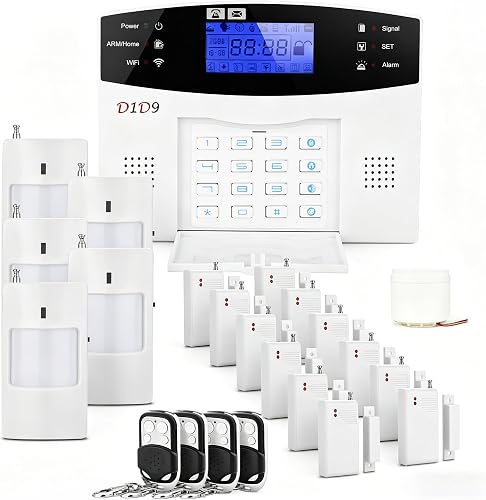
D1D9 24pcs Wireless DIY Home Burglar Alarm
9.2/10 our score
See it on Amazon -
3
 Best for a touchscreen hub
TUGARD Alarm System with Phone APP Alert
9.1/10 our score
See it on Amazon
- 4
 Check it
YISEELE Home Security System Wireless
Best for renters - 5
 Best for Alexa householdsCheck it
- 6
 Check it
Hapippofa GEN 2 Wireless Home Security System
Best for multi-room motion coverage - 7
 Best for small apartmentsCheck it
The best DIY home security systems with sensors, ranked
The tolviviov kit wins on coverage per dollar and setup simplicity. The rest of the list fills gaps: bigger layouts, cellular backup, touchscreen control and small flats where two sensors are plenty.
Our score weighs specs, features and buyer feedback against what you're shopping for.
tolviviov 15-Piece WiFi Home Security System: Best for most homes
- 15-piece kit
- 120 dB siren
- No monthly fee
- Works with Alexa
- Expandable to 20 sensors and 5 remotes
Ten door sensors and a motion detector cover the entry points most homes already have. The app, keypad and remotes give you three ways to arm it.
Pros
- Ten door sensors in the box
- No monthly fee
- Alexa voice control
Cons
- 2.4GHz WiFi only
- The motion detector covers just one area
tolviviov suits a typical house or flat where the front door, back door and ground-floor windows all need watching. The box holds 10 door sensors, so you can cover every entry point without buying extras.
A keypad arms the system at the door, two remotes handle the bedside and the car, and the app lets you check in from anywhere. The base station works with Alexa, so voice arming is an option for hands-full moments.
The 120 dB siren is loud enough to make a burglar think twice. Coverage is limited to one motion sensor, though, so a second hallway or landing needs an add-on.
Expansion goes to 20 sensors and 5 remotes. The kit runs on 2.4GHz WiFi only, which matters if your router splits bands.
The base station weighs about a kilogram, so it sits securely on a shelf.
Buy it for full entry coverage at a low upfront cost. Skip it for a large house where you want motion detection in every room.
D1D9 24pcs Wireless DIY Home Burglar Alarm: Best for larger layouts
- 24-piece kit
- 4G and WiFi
- No monthly fee
- Peel-and-stick install
- Wired siren
The biggest box here pairs a WiFi host with 4G backup so alerts can keep coming when the internet drops. Peel-and-stick sensors speed up a weekend install.
Pros
- 4G backup as well as WiFi
- 24-piece box with spares
- No monthly fee
Cons
- Needs a SIM card or WiFi to work
- Batteries are not guaranteed
D1D9 suits a two-storey home or a small office where the WiFi signal does not reach every corner. Its host takes 4G as well as WiFi, so alerts keep coming when the router drops.
The kit arrives with four door and window sensors, a motion detector, two remotes and a wired siren. Peel-and-stick mounting means an install in about 30 minutes without tools.
The host states an 80-meter range, which helps in a long building.
A SIM card is needed for the 4G side. The batteries in the box are included as a starter set, so plan to buy replacements when they run down.
The wired siren needs a power point near its mount.
Compared with the top pick, this kit trades sensor count for connectivity backup. Its two remotes are matched by the tolviviov kit, but the sensor count is lower.
Choose it when reliability matters more than covering every window. Skip it if your home has strong WiFi throughout and you want the most sensors per kit.
TUGARD Alarm System with Phone APP Alert: Best for a touchscreen hub
- 2.4-inch TFT color screen
- 2G and WiFi
- No monthly fee
- Works with Alexa and Google
- 100 wireless zones
A color screen on the hub shows arm and disarm status at a glance. A 2G SIM keeps calls and texts moving when WiFi goes down.
Pros
- Screen shows system status
- 2G backup when WiFi fails
- RFID cards and SOS key
Cons
- SIM card sold separately
- 2.4GHz WiFi only
TUGARD suits a family that wants to see the system status without opening an app. The 2.4-inch color screen shows time and arm or disarm state, and the menu runs in 11 languages.
Four door and window sensors, a motion detector and a siren form the base kit. Two RFID cards and two remotes give children and older relatives simple ways to arm and disarm, and the remote has an SOS key.
The sensor count lands between the eufy and tolviviov boxes.
A 2G SIM slot keeps calls and texts working when WiFi goes down. The SIM is sold separately and the hub still needs 2.4GHz WiFi for app control.
The system takes 100 wireless zones, so it grows with the house. Its screen makes it the easiest kit here to operate without a phone.
The hub is also the slimmest unit in this group at under an inch deep.
Buy it for a household with mixed technical comfort levels. Skip it if you would rather have more sensors than a screen in the same budget.
YISEELE Home Security System Wireless: Best for renters
- 120 dB siren
- Self-adhesive sensors
- Backup battery in hub
- Works with Alexa and Google Home
- Expandable to 100 accessories
Four adhesive sensors and a hub install in about 15 minutes with no drilling. The hub keeps running on its own battery during a power cut.
Pros
- No-drill adhesive install
- Hub backup battery
- Grows to 100 accessories
Cons
- Fewer sensors than the top pick
- 2.4GHz WiFi only
YISEELE suits renters who cannot drill into door frames. The four door and window sensors stick on, and the hub can sit on a shelf, so moving out takes minutes.
A 120 dB siren and one remote are included. The remote carries a one-touch SOS button, which helps if someone in the home needs to call for help quickly.
The kit is also the lightest here at 136 grams for the hub.
The hub has a rechargeable backup battery that keeps the system running through a power cut. That is a backup the tolviviov kit does not state for its base station.
Expansion reaches 100 accessories, including motion detectors, smoke sensors and keypads. The kit itself covers fewer entry points than the top pick, so a larger home needs add-ons.
The hub runs on a 5-volt supply, so a spare adapter is easy to find.
Pick it for a rental flat with four main openings. Skip it if you need motion coverage in several rooms from day one.
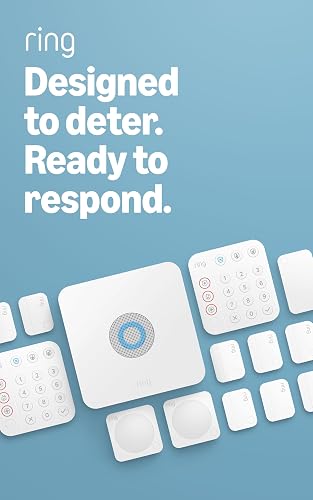
Ring Alarm 14-Piece Kit: Best for Alexa households
- 14-piece kit
- Two keypads
- Eight contact sensors
- Range extender
- Alexa compatible
Two keypads suit a front and back door, and the range extender stretches coverage in a long house. Optional professional monitoring costs extra.
Pros
- Two keypads in the box
- Range extender for large homes
- Optional 24/7 monitoring
Cons
- Remote arming needs a paid plan
- Voice arming needs a subscription
Ring suits an Alexa household that may want professional monitoring later. The 14-piece kit includes two keypads, eight contact sensors, two motion detectors and a range extender for a long house.
The keypads arm and disarm at two doors, and the app sends mobile notifications when a sensor trips. Eight contact sensors cover more openings than most kits here, and only the tolviviov kit brings more.
That count suits a two to four bedroom home.
Remote arming and voice disarming need a Ring Protect plan, and the same plan adds 24/7 professional monitoring. Without it, you still get app alerts and the local siren.
The range extender is the practical detail for a large or spread-out home. Budget for the optional plan if remote control matters to you.
The kit also supports extra sensors bought separately, so it can grow past its 14 pieces.
Choose it for an Alexa home that wants a monitoring option. Skip it if you refuse subscriptions and expect remote arming to be free.
Hapippofa GEN 2 Wireless Home Security System: Best for multi-room motion coverage
- 16-piece kit
- Touchscreen hub
- WiFi and 4G
- 100 dB wired siren
- SOS button
Six door sensors and three motion detectors cover more rooms than most kits here. The touchscreen hub and SOS button make daily use simple for the whole family.
Pros
- Three motion detectors
- Touchscreen hub
- 4G backup option
Cons
- SIM card and plan sold separately
- Hub mounts with screws rather than adhesive
Hapippofa suits a larger home or apartment where more than one room needs motion detection. The kit packs three motion detectors and six door and window sensors, plus a wired siren.
The touchscreen hub shows system status and switches between Stay, Away, Disarm and SOS modes. Two RFID fobs and two remotes mean everyone in the family has a way in without the app.
A dedicated SOS button adds a second emergency call option beside the remote.
WiFi handles app alerts and remote control, while a 4G SIM enables calls and texts when the internet fails. The SIM and its plan are sold separately, and 5GHz WiFi is not supported.
The kit's built-in siren is listed at 100 dB, a little below the 120 dB units elsewhere on this list.
Compared with the top pick, this kit spreads coverage across more rooms but includes fewer door sensors. The hub mounts with screws, so it is not a no-drill option.
It states a 100-foot wireless range.
Buy it for multi-room motion coverage and touchscreen control. Skip it for a flat where three motion detectors would see more of each other than of an intruder.
eufy 5-Piece Home Alarm Kit: Best for small apartments
- 5-piece kit
- Keypad and motion sensor
- No monthly fee
- Self-adhesive mounts
- eufy Security app
Two entry sensors and one motion sensor are enough for a studio or one-bedroom flat. Setup takes minutes and there is no monthly fee.
Pros
- Quick setup for small homes
- No monthly fee
- Keypad plus app control
Cons
- Only two entry sensors
- No siren in the box
eufy suits a studio or one-bedroom flat where two entry points and one motion sensor cover the whole home. The kit includes a HomeBase, a keypad, a motion sensor and two entry sensors.
Setup is quick and needs no drilling beyond the included mounts. The eufy Security app sends instant alerts when motion or a breach is detected, and there is no monthly fee.
The kit carries a 12-month manufacturer warranty.
A keypad means you can arm the system on the way out without your phone. The kit has fewer sensors than every other pick, so it is the narrowest fit here.
Its control is app and keypad only, with no remotes in the box.
Its 30-foot range is the shortest in this group. A larger flat would need extra sensors to reach the far side.
The motion sensor and keypad mount to walls with the included brackets.
Pick it for a small flat and a fast install. Skip it for a house with more than two entries, or if you want an audible siren in the base kit.
How these DIY sensor kits compare
The table lines up the kits by sensor count, connectivity and control methods. Use it to spot which one matches the openings in your home before reading the buying advice.
| Product | Best for | Connectivity | Included | Control | Our score |
|---|---|---|---|---|---|
| tolviviov 15-Piece WiFi Home Security System | most homes | 2.4GHz WiFi | 1 base station, 1 keypad, 1 motion sensor, 10 door sensors, 2 remotes | App, remote, voice | 9.5 |
| D1D9 24pcs Wireless DIY Home Burglar Alarm | larger layouts | 4G and WiFi | Host, 4 door/window sensors, 1 motion detector, 2 remotes, siren | 9.2 | |
| TUGARD Alarm System with Phone APP Alert | a touchscreen hub | 2G and 2.4GHz WiFi | Host, 1 motion detector, 4 door/window sensors, 2 remotes, 2 RFID cards, siren | Touchscreen, app, remote, RFID | 9.1 |
| YISEELE Home Security System Wireless | renters | 2.4GHz WiFi | Hub, 4 door/window sensors, 1 remote | 8.8 | |
| Ring Alarm 14-Piece Kit | Alexa households | Wireless | Base station, 2 keypads, 8 contact sensors, 2 motion detectors, range extender | 8.6 | |
| Hapippofa GEN 2 Wireless Home Security System | multi-room motion coverage | 2.4GHz WiFi and 4G | Hub, 6 door/window sensors, 3 motion detectors, 2 remotes, 2 RFID fobs, SOS button, siren | Touchscreen, app, remote | 8.4 |
| eufy 5-Piece Home Alarm Kit | small apartments | Wireless | HomeBase, keypad, motion sensor, 2 entry sensors | App and keypad | 8.1 |
How we compared these DIY home security systems with sensors
We compared each kit's sensor count, connectivity, control methods and expansion limits against what a typical home needs to cover its entries. The score also weighs how well the kit runs without a subscription.
Sensor count came first. A kit with 10 door sensors covers far more of a house than one with two, and that gap matters more than most extra features.
We split door and window sensors from motion detectors, because the first covers openings and the second covers movement.
Connectivity came second. WiFi-only kits are simple and cheap to run, but 4G or 2G backup keeps alerts moving during an outage.
We noted which kits need a SIM card and plan you buy yourself.
Control methods came third. A keypad, remotes, RFID cards and a screen all reduce how often you reach for your phone.
A kit that only works through an app is harder for guests or grandparents to use.
We also checked expansion limits. A kit that accepts 100 accessories can grow with a house, while a small kit stays small unless it offers add-ons.
Finally, we looked at what each hub does during a power cut, since a dead hub means a silent alarm.
Which sensor kit fits the size of your home?
Match the kit to your entry count first. A flat with two doors needs a very different box from a house with a back door, a garage and six ground-floor windows.
For a flat or small house
A studio or one-bedroom flat has two to four openings, so the eufy 5-Piece or the YISEELE kit covers it without waste. Both install quickly and need no subscription.
The eufy kit is the smaller of the two at two entry sensors, while YISEELE gives you four.
For a typical family house
The tolviviov 15-Piece fits a house with a front door, back door and several windows. Its 10 door sensors mean you rarely need to buy extras on day one.
The Ring kit covers a similar footprint with eight contact sensors plus two motion detectors if Alexa integration matters to you.
For a large or spread-out home
Look at the D1D9 kit or the Hapippofa kit when rooms sit far apart. The D1D9 host adds 4G backup and an 80-meter range, and Hapippofa brings three motion detectors for hallways and landings.
The Ring range extender is the other option for a long house.
What should you check before buying a sensor kit?
Check three things: how many sensors you need, how the kit connects to the internet, and whether the controls suit everyone in the home. Get those right and the rest is detail.
Count your doors and windows
Walk the ground floor and count every opening you would want to hear. Add one motion sensor for the main hallway.
A kit with fewer sensors than that count needs add-ons, which costs more than choosing a bigger box. Door and window sensors work on the opening itself, so each window you want covered needs its own sensor.
Check the WiFi band
Most kits here need a 2.4GHz network and will not join a 5GHz one. If your router runs both bands under one name, split them before setup or the hub may fail to connect.
TUGARD also warns that the WiFi password must not contain a space or special characters.
Decide if you want cellular backup
WiFi-only kits lose their app alerts when the internet drops. The D1D9, TUGARD and Hapippofa hosts take a SIM card for calls and texts, though you buy the SIM and its plan separately.
D1D9 uses 4G, TUGARD uses 2G and Hapippofa uses 4G.
Check the backup battery
A hub with a rechargeable battery keeps the siren and sensors working during a power cut. YISEELE states a backup battery in its hub; the other kits in this list don't state one, so weigh that if outages are common where you live.
Think about who arms it
A keypad or screen helps people who dislike phone apps. RFID cards and remotes suit children and older relatives.
The TUGARD screen and the Hapippofa touchscreen are the friendliest for mixed households, while the Ring kit's two keypads cover two doors.
Check the sensor range
Each kit lists a maximum wireless range, from 30 feet on the eufy kit to 80 meters on the D1D9 kit. A sensor at the far end of a long house can fall outside the hub's reach.
If your home is spread out, pick a kit with a longer range or a repeater.
Do these sensor kits need a monthly fee?
No. Every kit in this roundup runs without a subscription for app alerts, sirens and remote control.
Paid plans are optional.
The Ring kit is the one to watch. Remote arming and voice disarming need a Ring Protect plan, and the same plan adds 24/7 professional monitoring.
Without it, you still get app notifications and the local siren.
The other kits push alerts through free apps such as Tuya, Smart Life or their own app. Some apps offer paid SMS or call alerts as an extra, and you can close that screen and keep the free push alerts.
The YISEELE kit states that its payment screen is only for optional SMS and call notifications.
Which kit should you buy?
Buy the tolviviov 15-Piece for most homes, because 10 door sensors plus a motion detector cover the entries a typical family worries about and there is no monthly fee. Pick the D1D9 kit if you want 4G backup, the TUGARD kit for a touchscreen and 2G fallback, or the Hapippofa kit when more rooms need motion coverage.
For a flat, the eufy 5-Piece or YISEELE kit is the better size. For an Alexa home that may want monitoring later, the Ring 14-Piece is the natural fit.
Whichever you choose, set it up one sensor at a time and test each one before you rely on it. Our abode security system explainer shows how a subscription-based system differs from these no-fee kits if you are still weighing the two routes.
Our top 3 picks at a glance
-
1
-
2
Best for larger layouts
D1D9 24pcs Wireless DIY Home Burglar Alarm
9.2/10 our score
See it on Amazon -
3
Best for a touchscreen hub
TUGARD Alarm System with Phone APP Alert
9.1/10 our score
See it on Amazon
Frequently asked questions
How many sensors does a typical home need?
Count every door and window you would want to hear open, then add one motion detector for a hallway or main room. A one-bedroom flat often needs two to four sensors, while a house with several entries may need eight or more.
Can I add more sensors later?
Yes on most kits here. The tolviviov station accepts up to 20 sensors and 5 remotes, YISEELE supports up to 100 accessories and the TUGARD hub takes 100 wireless zones.
Do these systems call the police?
No. The kits here send app alerts, and some make an alarm call or text to numbers you set.
Only the Ring kit offers optional professional monitoring that can request emergency response, and that needs a paid plan.
Will a DIY alarm work without a monthly fee?
Yes. Every kit in this roundup runs without a subscription for app alerts, sirens and remote control.
Paid plans are optional extras, such as Ring Protect for remote arming and monitoring.
What happens to the alarm during a power cut?
It depends on the hub. YISEELE puts a rechargeable backup battery in its hub, and the TUGARD and D1D9 hosts can use a 2G SIM for alerts.
Check each kit's backup before you buy if outages are common where you live.


