8 Best DIY Home Security Systems With Central Hub (November 2026)
The best DIY home security systems with a central hub include the tolviviov 15-Piece WiFi Home Security System for whole-home coverage without a monthly fee, the Ring Alarm 8-Piece Kit (2nd Gen) for small homes and renters, and the SimpliSafe 10 Piece Wireless Home Security System for cameras and entry protection together.
On this page (8 sections)
- The best DIY hub kits, ranked by score
- How the eight hub kits compare side by side
- How many door and window sensors do you actually need?
- Which hub type fits how you'll use the system?
- How much does a central hub system cost to run?
- What should renters look for in a hub kit?
- Do you need cameras in the same hub kit?
- Which hub kit should you buy?
The best DIY home security system with a central hub for most homes is the tolviviov 15-Piece kit, because one base station covers 10 doors and windows plus motion with no monthly fee. Choose the Ring Alarm 8-Piece kit for a small home that might add monitoring later, or SimpliSafe if you want outdoor cameras in the same box.
The hub is what makes a DIY kit a system rather than a set of standalone alarms. It takes signals from the sensors, sounds the siren and pushes alerts to your phone.
So the hub type, not the sensor count alone, decides how the kit feels day to day.
This roundup groups the eight kits by what each hub does best. If you're still learning the basics, start with our guide to a DIY alarm system and what to buy.
Our picks at a glance
-
1
 Best for whole-home coverage without a monthly fee
tolviviov 15-Piece WiFi Home Security System
9.5/10 our score
See it on Amazon -
2

-
3
 Best for cameras and entry protection together
SimpliSafe 10 Piece Wireless Home Security System
8.9/10 our score
See it on Amazon
- 4
 Check it
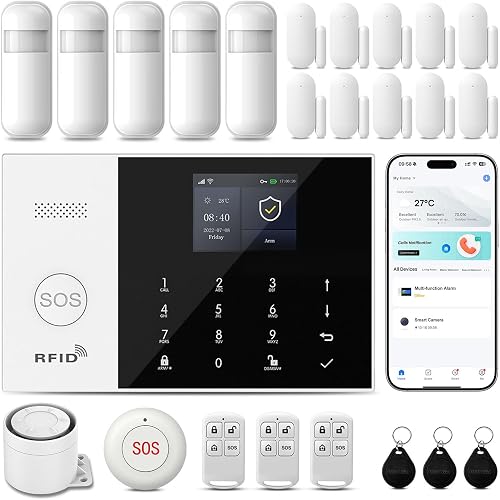
PGST Alarm System for Home Security
Best for keeping alerts when WiFi drops - 5
 Best for 2-4 bedroom homesCheck it
- 6
 Check it
Hapippofa GEN 2 Wireless Home Security System
Best for a touchscreen hub and renters - 7
 Best for on-panel controlCheck it
- 8
 Check it
eufy 7-Piece Essential Alarm System
Best for local storage and simple entry coverage
The best DIY hub kits, ranked by score
The tolviviov kit tops the list for coverage per dollar without a fee. The rest of the field splits by hub style: app-first WiFi hubs, touchscreen panels, and kits that pair a hub with cameras or 4G backup.
Pick the hub you'll actually use, then match sensors to your doors and windows.
tolviviov 15-Piece WiFi Home Security System: Best for whole-home coverage without a monthly fee
- 10 door/window sensors
- 1 motion sensor
- 120 dB siren
- No monthly fees
- Works with Alexa
Ten door sensors plus motion from one WiFi hub give you wide entry coverage at no monthly cost. The kit also includes a keypad and two remotes.
Pros
- 10 door/window sensors in the box
- No monthly fees
- 120 dB siren
- Expandable to 20 sensors and 5 remotes or keypads
Cons
- 2.4GHz WiFi only
- Battery powered
The tolviviov kit gives the widest entry coverage here with 10 door and window sensors, one motion sensor, a keypad and two remotes, all from one WiFi base station. That's enough to cover most front, back and side doors plus ground-floor windows in a typical home.
Setup is adhesive strips or screws, then pairing through the app. The base station carries a 120 dB siren and works with Alexa for hands-free control.
It runs on 2.4GHz WiFi only, so check your router band before buying.
The hub handles up to 20 sensors and 5 remotes or keypads, so a garage door or extra room can be added later. It runs on battery power and measures 10.24 by 7.86 by 2.68 inches, so it sits easily on a shelf or mounts to a wall.
There's no monthly fee for app alerts or the siren. For a whole-home kit that stays free, this is the strongest pick.
Ring Alarm 8-Piece Kit (2nd Gen): Best for small homes and renters
- 4 contact sensors
- 1 motion detector
- Range extender
- Optional 24/7 professional monitoring
- Alexa voice control with a plan
An eight-piece kit sized for 1-2 bedroom homes, with optional professional monitoring you add only if you want it. A range extender helps reach far sensors.
Pros
- Range extender included
- Monitoring is optional
- Alexa voice arming with a plan
Cons
- Only 4 contact sensors
- Remote arming and cellular backup need a Ring Protect plan
Ring's 8-piece kit suits a 1-2 bedroom home or an apartment where the doors and windows are few. You get one base station, a keypad, four contact sensors, one motion detector and a range extender.
The extender helps when the base station sits in a back room.
The Ring app sends alerts when the system triggers and shows all your Ring devices in one place. Monitoring is optional, so the kit works as a self-monitored system out of the box.
A Ring Protect plan adds remote arming from anywhere and keeps the system online if WiFi drops.
Voice arming through Alexa also needs a plan. The trade-off is coverage: four contact sensors leave more entry points open than the larger kits.
It's the right size for a small floor plan, not a whole house. Pair it with extra contact sensors or a Ring camera later if you decide you want more.
SimpliSafe 10 Piece Wireless Home Security System: Best for cameras and entry protection together
- Outdoor Camera Series 2
- Indoor smart camera
- 4 entry sensors
- 2 motion sensors
- Optional 24/7 monitoring, no contract
A ten-piece kit that pairs the base station and keypad with four entry sensors, two motion sensors and cameras inside and out. Monitoring is optional and contract-free.
Pros
- Outdoor and indoor cameras in the box
- No long-term monitoring contract
- Video verification available on select plans
- 24-hour backup battery
Cons
- Premium tier among the kits here
- Some camera and AI features need monitoring plans
SimpliSafe's 10-piece kit is the only pick that includes cameras in the box: an outdoor camera and an indoor smart camera, plus four entry sensors and two motion sensors on the same base station. That makes it the choice when you want to see activity and detect entry from one app.
The outdoor camera offers a 140-degree view, 1080p HD and color night vision with a spotlight. It installs wirelessly with the included rechargeable battery or wired with the power cable.
The base station has a 100 dB siren and a 24-hour backup battery. SimpliSafe sells optional monitoring with no long-term contract, and video verification on select plans can mean faster police dispatch.
This is the premium kit in the group. Some camera AI features need a monitoring plan.
If you mainly want sensors and a siren, a simpler hub covers you for less.
PGST Alarm System for Home Security: Best for keeping alerts when WiFi drops
- WiFi plus 4G backup
- No monthly fees
- 120 dB siren
- SOS button and remotes
- Works with Alexa and Google
The hub runs on 2.4GHz WiFi and switches to a 4G SIM when WiFi fails, so alerts keep moving. The kit includes an SOS button and remotes for quick help.
Pros
- 4G backup when WiFi drops
- No monthly fees
- 120 dB siren
- SOS button included
- Alexa and Google voice control
Cons
- 5GHz WiFi not supported
- SIM card and cellular plan sold separately
PGST's kit is built for one worry most WiFi hubs share: losing alerts when the internet drops. The hub runs on 2.4GHz WiFi and automatically switches to a 4G SIM when WiFi fails, so alarms and app alerts keep moving.
The kit includes a 120 dB siren, a portable SOS button and remotes.
The SOS device triggers an app alert and the hub siren at once, which helps in homes with elderly family members or children. Alexa and Google Assistant both work for hands-free control.
You can set schedules to arm at night and disarm in the morning.
The 4G SIM and its plan are sold separately. If you never fit a SIM, the kit still works as a WiFi hub with app alerts.
The hub also logs event history in the app and lets you share access with family members, so several people can watch the system. It's the pick when a dead internet line shouldn't mean a dead alarm.
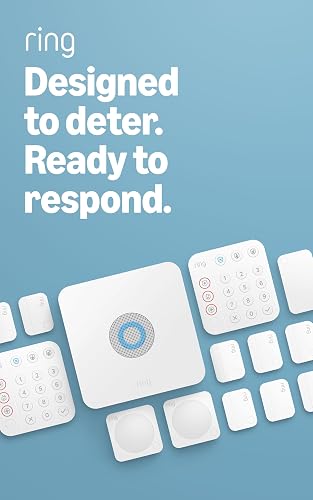
Ring Alarm 14-Piece Kit: Best for 2-4 bedroom homes
- 8 contact sensors
- 2 motion detectors
- 2 keypads
- Range extender
- Optional 24/7 monitoring
The larger Ring kit doubles the keypads and contact sensors of the 8-piece set for a 2-4 bedroom home. It uses the same base station and app.
Pros
- Two keypads for separate entries
- 8 contact sensors and 2 motion detectors
- Range extender included
- Optional Ring Protect monitoring
Cons
- Monitoring and remote arming need a Ring Protect plan
- Costs more than the 8-piece kit
This 14-piece Ring kit scales the same base station to a 2-4 bedroom home. It adds eight contact sensors and two motion detectors, plus a second keypad so one can sit by the front door and another near a back entrance or garage.
The range extender carries the signal to far sensors, and the app manages alerts and device status. Ring Protect monitoring stays optional here too, adding professional dispatch, remote arming and cellular backup when you subscribe.
It's the more complete Ring option when the 8-piece set leaves too many windows open. The trade-off against SimpliSafe is cameras: this kit has none in the box, so you'd add Ring cameras separately if you want video.
If you already have Ring cameras or a Ring doorbell, this kit folds them into the same app and base station without extra hardware.
Hapippofa GEN 2 Wireless Home Security System: Best for a touchscreen hub and renters
- Touchscreen hub
- 6 door/window sensors
- 3 motion detectors
- 120 dB wired siren
- No monthly fee
- WiFi plus 4G
A 16-piece kit built around a touchscreen hub with Stay, Away, Disarm and SOS modes on the panel. It runs on WiFi and adds 4G calls when a SIM is fitted.
Pros
- Touchscreen hub for on-panel control
- No monthly subscription
- 6 sensors and 3 motion detectors
- WiFi plus 4G option
- SOS button and RFID key fobs
Cons
- 5GHz WiFi not supported
- 4G SIM and plan sold separately
Hapippofa's 16-piece kit centers on a touchscreen hub with Stay Arm, Away Arm, Disarm and SOS modes on the panel. Six door and window sensors and three motion detectors spread coverage across a home or apartment, and two RFID fobs and two remotes give the family quick arming options.
The hub connects to 2.4GHz WiFi for app control and alerts, and takes a 4G SIM for alarm calls and SMS when the line drops. A wired 120 dB siren is included for audible deterrence.
Sensors arrive pre-paired to cut setup time.
The 4G SIM and plan are sold separately. The hub mounts on a wall or sits on a desk, and the external siren can go where the sound carries best.
For a renter or a family that wants a visible panel rather than app-only control, this hub strikes a good balance between screen control and no monthly fee.
PGST Home Security System: Best for on-panel control
- 4.3-inch touchscreen
- WiFi plus 2G/3G/4G
- No monthly fees
- Anti-tamper alarm
- 12+ month sensor batteries
A touchscreen hub with a 4.3-inch IPS display for checking status and arming without the app. An anti-tamper alarm and password lock add a layer of protection.
Pros
- 4.3-inch touchscreen with clear status
- Anti-tamper alarm and password lock
- WiFi plus cellular option
- No monthly fees
- Sensor batteries rated 12+ months
Cons
- Fewer sensors included than the larger kits
- 5GHz WiFi not supported
PGST's touchscreen model puts a 4.3-inch IPS color screen at the center of the system. The status bar, clock and system state sit right on the panel, so you can arm and disarm without opening the app.
An anti-tamper alarm triggers if someone forces the unit, and a password lock stops the alarm from being silenced without the code.
The hub supports 2.4GHz WiFi plus 2G/3G/4G through a SIM card. Without a SIM you still get app alerts.
Door sensor batteries are rated 12+ months and the hub flags low battery so a sensor doesn't quietly die. The multilingual menu and voice prompts help households where not everyone reads the same language.
This kit ships as a hub with sensors rather than a large fixed bundle. That suits a buyer who wants to add sensors room by room.
The screen also makes it a strong fit for family members who dislike app-only control.
eufy 7-Piece Essential Alarm System: Best for local storage and simple entry coverage
- HomeBase Mini with 64GB storage
- 4 entry sensors
- 1 motion sensor
- Keypad
- No monthly fee
A seven-piece kit with a HomeBase Mini hub that stores locally, four entry sensors and a motion sensor. Setup uses in-app guidance and no wiring.
Pros
- 64GB local storage in the hub
- No monthly fees
- 5-year sensor battery life
- Works with selected eufy cameras
Cons
- Only 4 entry sensors
- Fewest pieces in this group
eufy's 7-piece kit is the smallest here, with a HomeBase Mini hub, a keypad, four entry sensors and one motion sensor. The hub holds 64GB of local storage, so video from compatible eufy cameras stays on the device rather than in a cloud plan.
There's no monthly fee.
Entry sensors and motion sensors are rated up to 5 years on one battery, and the keypad is USB rechargeable with about 6 months per charge. Setup runs through in-app guidance with no wiring.
You can add eufy sensors and accessories later through the app.
The catch is coverage. Four entry sensors suit a small home or an apartment, not a whole house with many windows.
Pick it when you already own eufy cameras and want a hub that ties them to entry sensors without a fee. Otherwise a larger kit gives you more doors for the same effort.
How the eight hub kits compare side by side
The comparison table lines up the kits by hub type, piece count, siren strength and whether a monthly fee is required. Start there if coverage or connectivity is your main decision.
| Product | Best for | Kit pieces | Hub type | Siren | Our score |
|---|---|---|---|---|---|
| tolviviov 15-Piece WiFi Home Security System | whole-home coverage without a monthly fee | 15 | WiFi base station | 120 dB | 9.5 |
| Ring Alarm 8-Piece Kit (2nd Gen) | small homes and renters | 8 | Base station with keypad | 9.0 | |
| SimpliSafe 10 Piece Wireless Home Security System | cameras and entry protection together | 10 | Base station with keypad | 8.9 | |
| PGST Alarm System for Home Security | keeping alerts when WiFi drops | 24 | WiFi and 4G hub | 120 dB | 8.7 |
| Ring Alarm 14-Piece Kit | 2-4 bedroom homes | 14 | Base station with two keypads | 8.6 | |
| Hapippofa GEN 2 Wireless Home Security System | a touchscreen hub and renters | 16 | Touchscreen hub | 120 dB wired | 8.4 |
| PGST Home Security System | on-panel control | Hub and sensors | Touchscreen hub | 8.0 | |
| eufy 7-Piece Essential Alarm System | local storage and simple entry coverage | 7 | HomeBase Mini | 7.7 |
Our scores weigh specs, features and the fit with what someone shopping for a DIY hub system wants. Each kit got one score across the site.
The hub type carried the most weight. A base station with app control, a touchscreen panel and a hub with 4G backup all solve different problems.
Sensor count came next, because it decides whether a kit covers a whole home or just the main entry points.
We also weighed siren strength and whether the kit works without a subscription. Kits that need a plan for remote arming or cellular backup were scored lower on everyday value.
Finally, we checked expansion options so a kit can grow with the home.
Why does the hub type matter more than the sensor count?
A kit with 10 sensors on a hub you find awkward to arm will get used less than a kit with 6 sensors and a panel you like. The hub decides how you arm, how you silence a false alarm and how you get alerts.
Sensor count only sets how much of the house you cover on day one.
That's why the touchscreen hubs score well despite shipping fewer pieces than the tolviviov kit. The screen changes the daily routine for families who don't want to open an app every time they leave.
The app-first hubs suit people who mostly arm from their phone. Match the hub to the habit first, then buy the sensor count your home needs.
How many door and window sensors do you actually need?
Count every exterior door and every ground-floor window, then add motion sensors for hallways and main living areas. A typical house needs about 10 door or window sensors plus two motion detectors for basic coverage.
Walk the house with a notepad. Mark each door that leads outside and each window a person could reach from the ground.
Skip second-floor windows unless a porch roof or tree makes them easy to reach.
Then look at the kits here. The tolviviov 15-piece set covers 10 doors or windows plus motion in one box.
The Ring 14-piece kit offers 8 contact sensors and 2 motion detectors. The eufy and Ring 8-piece kits are best kept for small homes or apartments.
Should I buy extra sensors now or later?
Buy the kit that covers your main entries now, then add sensors as you notice gaps. Most hubs here accept extra sensors, so you don't need to predict every window.
What about motion sensors?
Place motion sensors where an intruder would walk, not where pets roam. The SimpliSafe motion sensor is rated for pets under 60 lb.
For a hallway or stairs, one sensor per floor is usually enough. eufy recommends mounting its motion sensor 6 to 7.5 ft up and angling it across the field of view rather than at a door.
Which hub type fits how you'll use the system?
Pick the hub by how you arm and disarm day to day. If you use a phone most of the time, a WiFi base station is the simplest.
If some family members dislike apps, a touchscreen panel wins.
WiFi base stations like the tolviviov and Ring hubs pair with a keypad and remote, then lean on the app for alerts. They're easy to set up and need only your home WiFi.
The trade-off is that a WiFi outage can interrupt app alerts.
Touchscreen hubs like the PGST and Hapippofa panels put arming on the wall. They suit households with older family members or anyone who wants a visible status light.
Both also offer cellular backup as an add-on.
What happens when the WiFi goes down?
A WiFi-only hub keeps the local siren working but loses app alerts until the connection returns. The PGST and Hapippofa kits add 4G backup for alerts and calls, with a SIM and plan.
Do I need professional monitoring?
No. Every kit here works as a self-monitored system.
Ring and SimpliSafe sell optional plans for professional dispatch. The other hubs send alerts to your phone and sound the siren, which many households find enough.
How much does a central hub system cost to run?
Most of the kits here run with no monthly fee at all. The tolviviov, PGST, Hapippofa and eufy systems include app alerts and siren alarms in the purchase.
Ring and SimpliSafe offer optional plans rather than requiring one.
Running costs depend on the extras you choose. A 4G SIM for the PGST or Hapippofa hub needs a cellular plan.
Ring Protect and SimpliSafe monitoring plans are optional but add remote arming, cellular backup and professional dispatch. SimpliSafe includes one free month of monitoring so you can try dispatch before deciding.
Battery upkeep matters too. Sensor batteries last years in most kits, but the eufy entry sensors are rated up to 5 years and the PGST sensors 12+ months.
The hub will flag low batteries in the app so you can replace them before they fail.
What should renters look for in a hub kit?
Renters should pick adhesive mounting and no monthly fee, so the system leaves no holes and no ongoing bill. The tolviviov 15-piece kit fits both, and the Ring 8-piece kit works if the apartment is small.
Check the lease for rules on drilling and adhesives. Adhesive strips are the safer choice for walls and doors you'll need to return as you found them.
A keypad that sits on a table or mounts with tape also helps.
Portability matters when you move. A WiFi hub with a few sensors packs easily.
If your next home is bigger, choose a kit with expansion room, like the tolviviov hub that accepts up to 20 sensors. The Hapippofa touchscreen hub also suits renters who want panel control without wiring into the building.
Can I take the system with me when I move?
Yes. These kits are wireless and battery powered, so you can remove the sensors and set them up at a new address.
Keep the hub's manual for re-pairing sensors after the move. A kit you already own saves you buying a whole new system at the next place.
Do you need cameras in the same hub kit?
Only if you want to check video alongside entry alerts. Sensors tell you a door opened; a camera shows you who opened it.
The SimpliSafe 10-piece kit is the only pick here with cameras in the box.
If you already have cameras, a sensor-focused hub kit is the better buy. eufy's HomeBase Mini works with selected eufy cameras and doorbells. Ring cameras tie into the Ring app on the same base station.
For a camera-first setup, read our guide to the best DIY home security system with cameras. A loud siren still helps as a deterrent, so see our picks for the best alarm siren to pair with a hub.
Can I add cameras to a sensor kit later?
Usually yes. Ring, SimpliSafe and eufy all sell cameras that share the same app.
Check compatibility before buying so the camera and hub talk to each other.
Which hub kit should you buy?
The tolviviov 15-Piece kit is the best DIY home security system with a central hub for most homes, because 10 door sensors and a motion sensor from one no-fee base station cover a whole house without a subscription. Pick Ring's 8-piece kit for a small apartment that may add monitoring later.
Choose SimpliSafe when cameras matter as much as sensors. Go with PGST or Hapippofa if 4G backup should keep alerts alive when WiFi fails. eufy is the pick for small homes that want local storage and no fee.
One last check: confirm your router runs 2.4GHz, because the WiFi hubs here don't support 5GHz.
Our top 3 picks at a glance
-
1
Best for whole-home coverage without a monthly fee
tolviviov 15-Piece WiFi Home Security System
9.5/10 our score
See it on Amazon -
2
-
3
Best for cameras and entry protection together
SimpliSafe 10 Piece Wireless Home Security System
8.9/10 our score
See it on Amazon
Frequently asked questions
What does a central hub do in a DIY home security system?
The hub is the brain that receives signals from sensors and decides what happens next. It sounds the siren, sends app alerts and manages the keypad and remotes.
Every kit here works through its own hub, so the hub type shapes how you arm the system.
Do DIY home security systems with a central hub need a monthly fee?
Not always. The tolviviov, PGST, Hapippofa and eufy kits work without a subscription for app alerts and local siren alarms.
Ring and SimpliSafe sell optional monitoring plans that add professional dispatch and some remote features.
Can I use a hub system without WiFi?
Some hubs keep working without WiFi. The PGST and Hapippofa kits add 4G backup for alerts when WiFi is down, though both need a SIM card and cellular plan.
A WiFi-only hub loses app alerts during an outage.
How many sensors do I need for a whole home?
Count every door and window you want covered, then add motion sensors for hallways and main rooms. A kit with 10 door sensors suits a typical whole-home install.
Larger homes should pick a kit with room to expand.
Are DIY hub systems hard to install?
No. These kits use adhesive strips or screws for sensors and pair through a phone app.
Most people finish in an afternoon.
Plan sensor placement first so the hub stays within wireless range.


